
Nikro Air Duct Cleaning in Spanish Fork: A Homeowner’s Guide
Owning a Nikro unit doesn’t automatically produce a clean duct system. The same machine that pulls contamination out effectively at the right CFM setting will simply stir fine particles back into your living room at the wrong one, and most homeowners have no way to tell which is happening. A Nikro vacuum in the driveway proves a company bought equipment. It doesn’t prove they know how to run it.
This guide is about what Nikro equipment actually does inside your ductwork, so you can ask better questions before you hire anyone in Spanish Fork. If you’d rather skip the research and get a straight answer, call (866) 937-8037.
What is Nikro air duct cleaning, and how does the equipment actually work?
Nikro air duct cleaning is a negative-pressure extraction method. A Nikro HVAC cleaning machine connects to your duct system through a sealed access point and pulls air out of the ducts while HEPA filtration captures what comes through. It creates a pressure difference between the inside of the ducts and the rooms around them. That difference is the whole point.
Here’s what negative pressure means in a residential context. Your duct system is a network of sheet metal and flex runs with seams, joints and hundreds of small penetrations. When a technician agitates dust off the duct walls, that dust has to go somewhere. Without a pressure differential holding it inside the system, it drifts into the room, settles on your furniture, and ends up back in your return air. With proper negative pressure, the contaminated air moves toward the vacuum instead of toward you.
Our technicians run Nikro professional HVAC extraction equipment for thorough debris removal at the unit level, and we pair it with Abatement Technologies negative-air and HEPA filtration. That’s the same standard trusted in mold and restoration work, where containment isn’t optional. The equipment stays the same. The skill is in how the technician sets it up for your particular house.
What we’ve found is that homeowners rarely get told the difference between a machine running and a machine running correctly. That gap is worth understanding.
Why the access point strategy matters more than the machine
The access point strategy determines whether your whole duct system gets cleaned or just the trunk line nearest the vacuum. A Nikro machine can only pull from where it’s connected. If a technician hooks up one access point in the basement and runs the brush through every register, the branch runs farthest from the vacuum lose pressure. Dust lifts, drifts, and re-settles somewhere the airflow won’t reach it.
A proper setup zones the home. That usually means:
- Identifying where the trunk line and each major branch need access cuts
- Sealing registers or closing off zones so pressure concentrates on the section being cleaned
- Working the system in segments, then re-checking pressure before moving on
- Keeping the vacuum running after agitation stops, so airborne debris clears before the machine is disconnected
In Spanish Fork, this matters more than it does in a lot of places because of how the housing stock varies. Older homes near the historic downtown often have original sheet metal trunks with short runs and tight clearances. Newer construction on the east bench tends to have longer flex runs and a bit more attic ductwork, which means more pressure loss per foot. A technician who sets access points the same way in both houses is guessing.
The right access strategy for a Spanish Fork home depends on run length, duct material, how many stories the system serves, and where the air handler sits. When it’s done properly, you can often hear the difference. The vacuum pitch stays steady instead of surging.
What Nikro equipment doesn’t do on its own
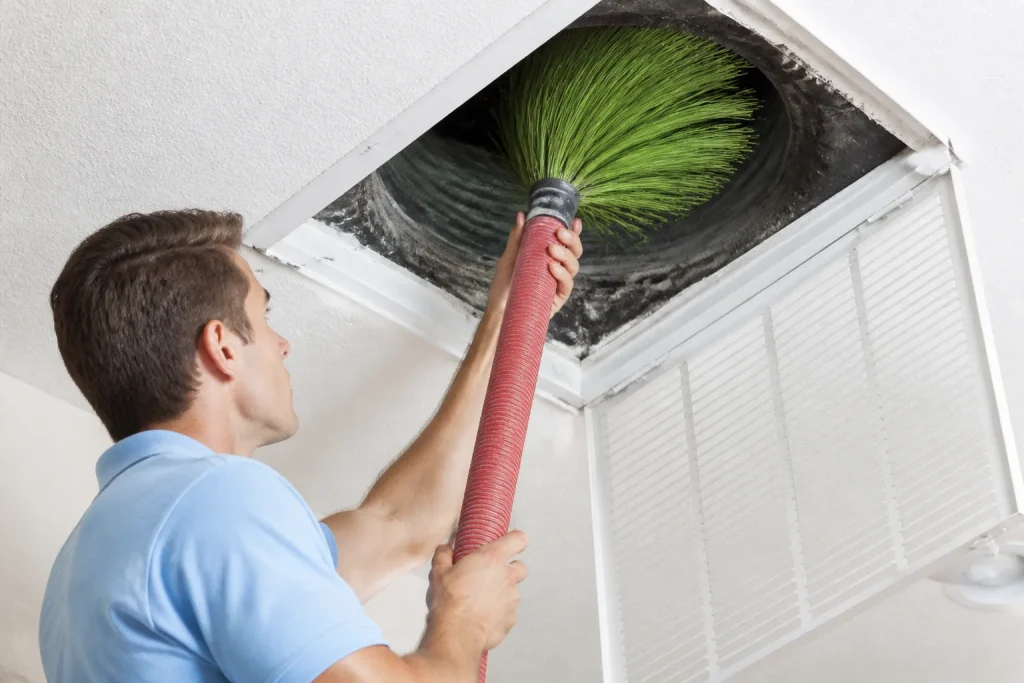
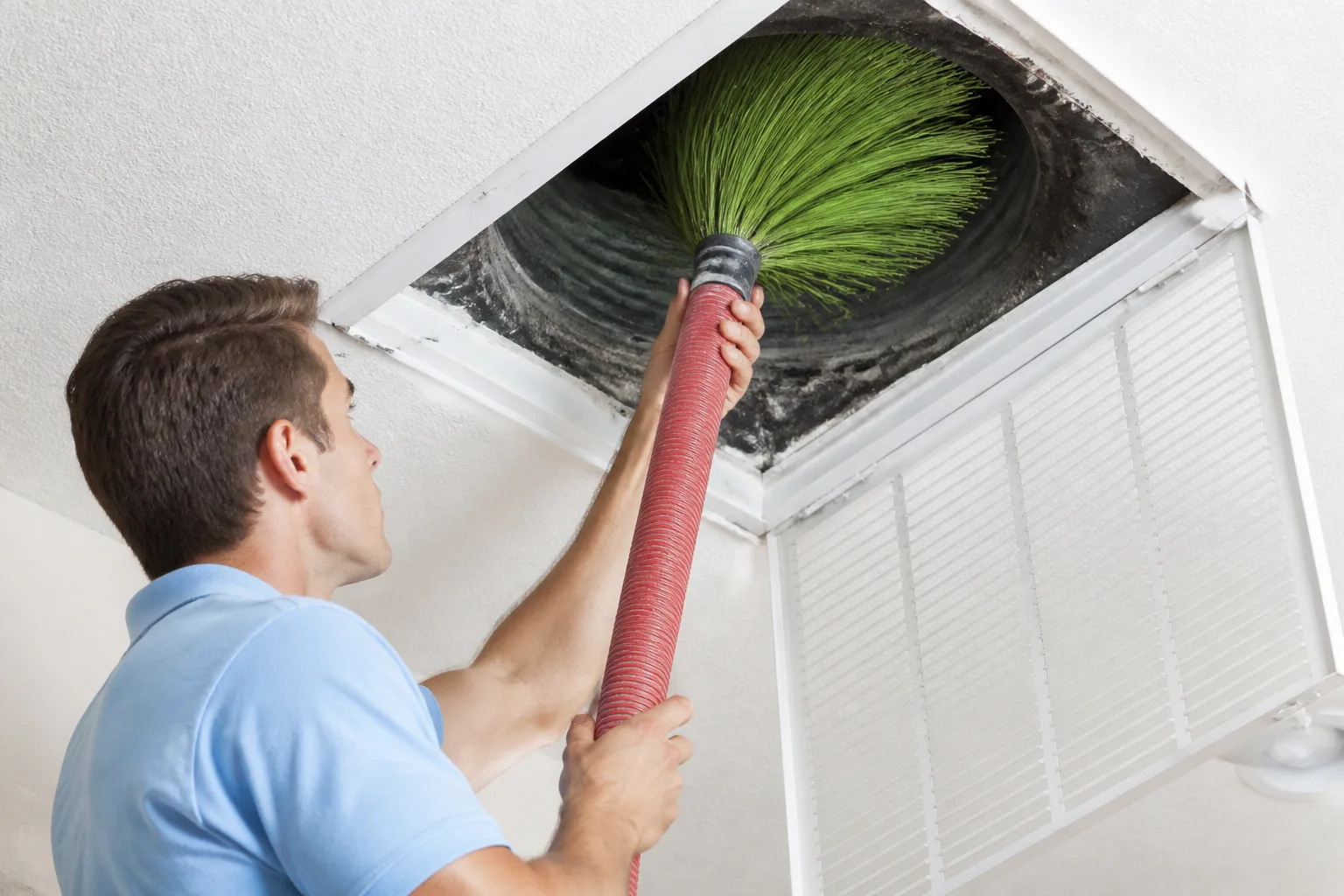
Nikro equipment doesn’t remove debris that’s bonded to duct walls. It pulls what’s already airborne or loose. If dust, lint, pet hair or construction residue has adhered to the inside of your ductwork, it needs mechanical agitation to break free before the vacuum can capture it. That’s what a rotary brush system does.
We use Rotobrush, the industry-benchmark rotary-brush cleaning system, on every duct cleaning job, and we run it alongside the Nikro extraction equipment. The two tools do different jobs:
- Nikro extraction and HEPA filtration hold contamination inside the system and pull it out
- Rotobrush rotary brushing contacts the duct wall and breaks material loose
Run one without the other and you get partial results. Brush a duct without negative pressure and you aerosolize everything into the living space. Vacuum a duct without brushing and you pull the loose dust but leave the film that keeps re-contaminating your air. Neither tool alone is a duct cleaning. Together, they are.
What Nikro equipment also doesn’t address is leaky ductwork. Gaps and disconnected joints let conditioned air escape and let attic or crawlspace air get pulled in, which brings new contaminants into a system you just cleaned. That’s why we offer duct repair and sealing alongside cleaning. Sealing a leak is often the step that makes a cleaning last.
Questions to ask before you hire a Nikro-equipped company in Spanish Fork
Ask these before you book. The answers separate a technician who understands the equipment from one who just owns it.
- Which Nikro model are you bringing, and what’s its rated CFM? A machine sized for a small residential system won’t hold pressure across a large two-story Spanish Fork home with long branch runs.
- When was the HEPA filter last certified or replaced? A HEPA filter past its service life passes fine particles. You want a date, not a shrug.
- How do you balance pressure in a multi-story home? Look for an answer about zoning, sealing registers and working in segments. If the answer is “we just hook it up and run the brush,” that’s a red flag.
- Will you show me before-and-after camera footage? A reputable company expects to be asked.
- Do you do duct sealing? If not, ask who handles the leaks the cleaning won’t fix.
- Are you cleaning the air handler and coil too, or just the ducts? A clean duct system pulling through a dirty coil is a partial job.
For a deeper look at what proper cleaning involves end to end, our page on air duct cleaning walks through the full process. If your dryer vent is part of the concern, that’s a separate and important job with its own risks, and dryer vent cleaning covers it in detail. And if your air handler and coil are the concern, HVAC cleaning explains what’s involved.
What a completed Nikro job should look like
A completed Nikro job should leave you with evidence, not just an invoice. “Clean” isn’t a feeling. It has a standard, and that standard is NADCA ACR 2021, the industry’s accepted cleanliness verification method for HVAC systems. You don’t need to read the whole document. You do need to know it exists, because it means a technician can be held to something objective.
Here’s what to look for when the work is finished:
- Before-and-after camera footage. You should see the inside of the ducts, not just a photo of a machine on your driveway. Ask to look at the footage of your own system.
- Filter condition. A HEPA filter pulled fresh and inspected at the end should show what it captured. Ask the technician to show you the machine before they pack up.
- Register and vent cleanliness. Take the covers off and look. Residue around the boot means the zone wasn’t fully addressed.
- Sealed access cuts. Any access point the technician opened needs to be closed properly and sealed. An open hole in your ductwork is a leak you didn’t have before.
- Air handler and coil condition. Blower wheel and coil should look clean, not just “less dirty.”
This is where the full-system approach pays off. If we’ve installed a Honeywell or Aprilaire filtration upgrade during the same visit, you can also verify the new filter is seated correctly before the technician leaves. One visit, one clean system, one filter change, and no second contractor to schedule.
When to call a pro
Many homeowners can handle routine filter changes and a visual check of their registers. What they can’t do is safely evaluate or clean the inside of their ductwork. The work involves opening sealed systems, handling the air handler and blower, and managing the pressure balance that keeps contamination from ending up in your living room.
Call a professional if you notice:
- Musty or stale odors when the system runs
- Visible dust puffing from registers when the furnace cycles
- Uneven airflow between rooms or floors
- Allergy symptoms that track with time spent indoors
- A dryer that takes longer than it used to (a sign of lint buildup in the vent)
Air handlers and electrical components are dangerous to open without training, and dryer vents carry a genuine fire risk. We’d rather tell you that plainly than hand you a list of steps you shouldn’t try at home. Our technicians have up to 8 years of experience working with those systems, and the local professional we connect you with is licensed and insured as their state requires.
The Bottom Line
Nikro equipment is only as good as the technician who runs it. If a company shows up with a Nikro machine but can’t explain its CFM rating, its HEPA filter age, or how they’ll balance pressure across your branch runs, they have an expensive tool and not much else. The equipment is real. The skill is what makes it work.
A proper job in Spanish Fork pairs Nikro extraction with Rotobrush agitation, contains the debris with Abatement Technologies filtration, checks the air handler and coil, and seals any leaks it finds. Then it shows you the footage so you can verify it yourself. One flat price per system, agreed before work starts, and before-and-after photos of your own ducts. That’s the standard we hold to.
If you’re in Spanish Fork and need help, Spanish Fork Air Duct Cleaning offers free estimates. Call (866) 937-8037. We answer 24/7. Fast dispatch from 7am to 7pm, Sunday through Friday.
Frequently Asked Questions
Nikro duct cleaning in Spanish Fork falls within a range of roughly $350 to $700 for a typical whole-home system, depending on square footage, number of branch runs, and how many stories the system serves. Duct sealing, sanitizing, and filter upgrades add to the total. The written estimate sets the final price, and it’s free. Call (866) 937-8037 for an exact quote.
No, but it’s worth being there. If you stay, you can watch the technician set up the access points, listen to whether the vacuum holds steady pressure, and see the before-and-after footage when the job wraps. Being present also lets you confirm the HEPA filter was fresh before the machine went to work. Call (866) 937-8037 to book a time that works for you.
Nikro equipment is built for HVAC ductwork. Dryer vents need a different approach because of lint density and the fire risk involved, and a technician trained for that setup handles it. We offer dryer vent cleaning as a separate service because it’s a different job with different tools. Call (866) 937-8037 and tell us which system you need looked at.
We don’t make health claims. Air duct cleaning removes accumulated dust, debris and microbial buildup from the duct system, which improves indoor air quality for most households. Whether it changes how you feel is something a doctor can speak to, not us. What we can do is clean the system properly and show you what came out of it. Call (866) 937-8037 for a free estimate.
Written by the team at Spanish Fork Air Duct Cleaning.
Need Air Duct Cleaning Help?
Call Spanish Fork Air Duct Cleaning - the local pro we connect you with is licensed and insured, with free written estimates in Spanish Fork.
(866) 937-8037