
Last updated November 23, 2026
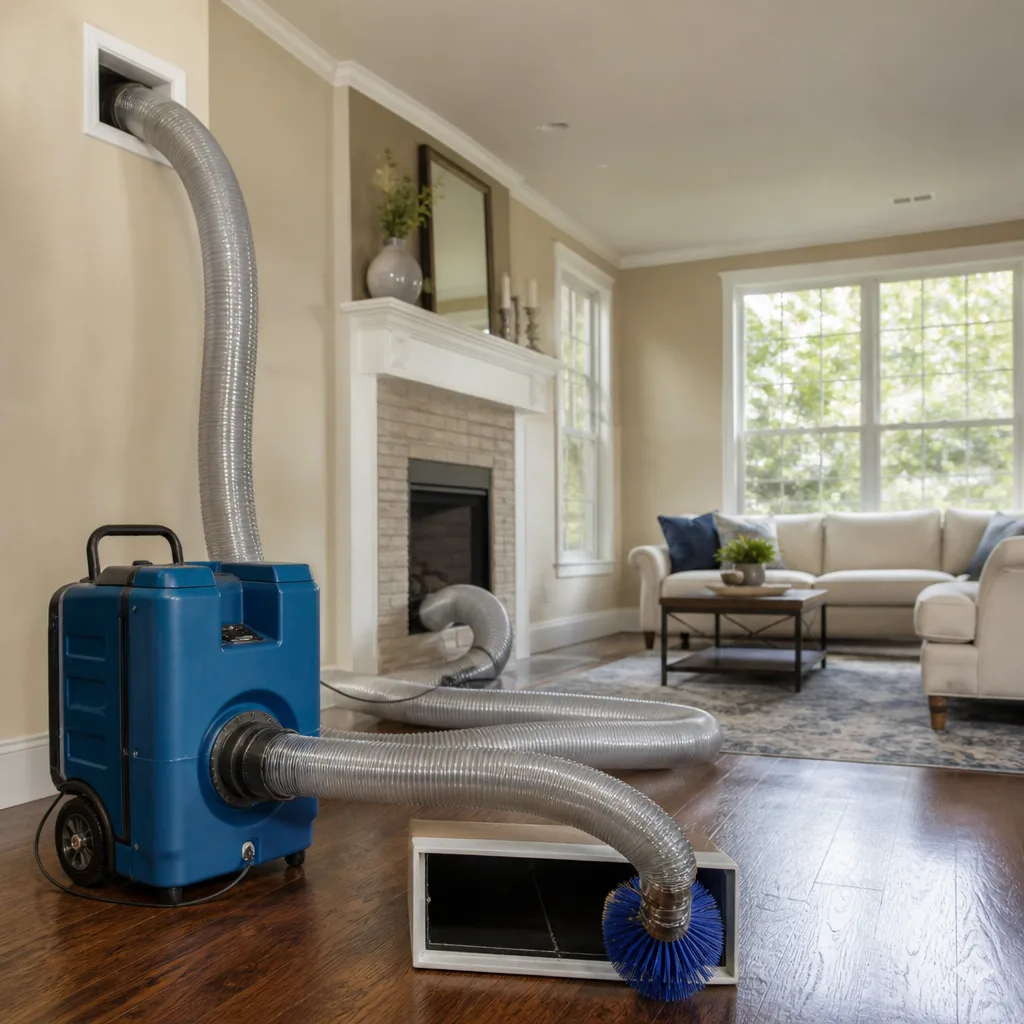 Whole-home duct cleaning
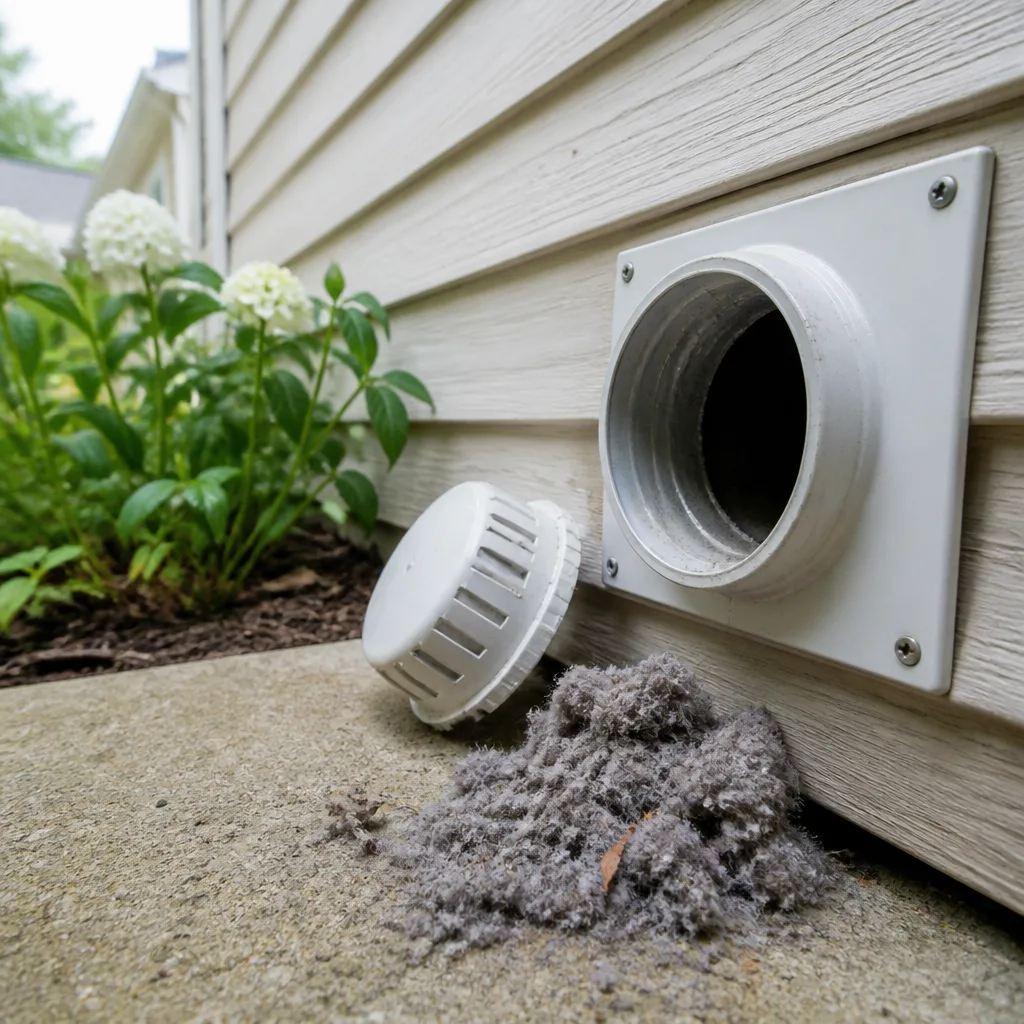 Dryer vent cleaning
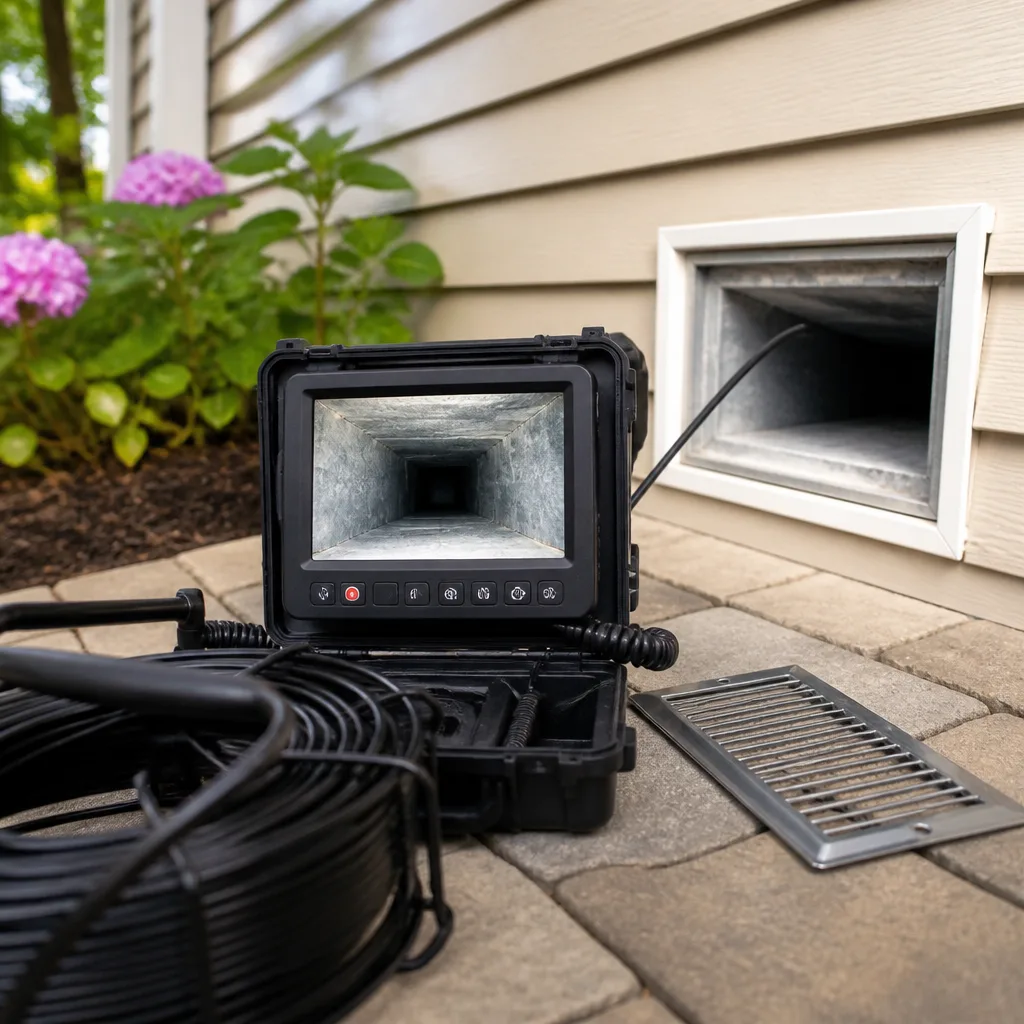 Camera inspection
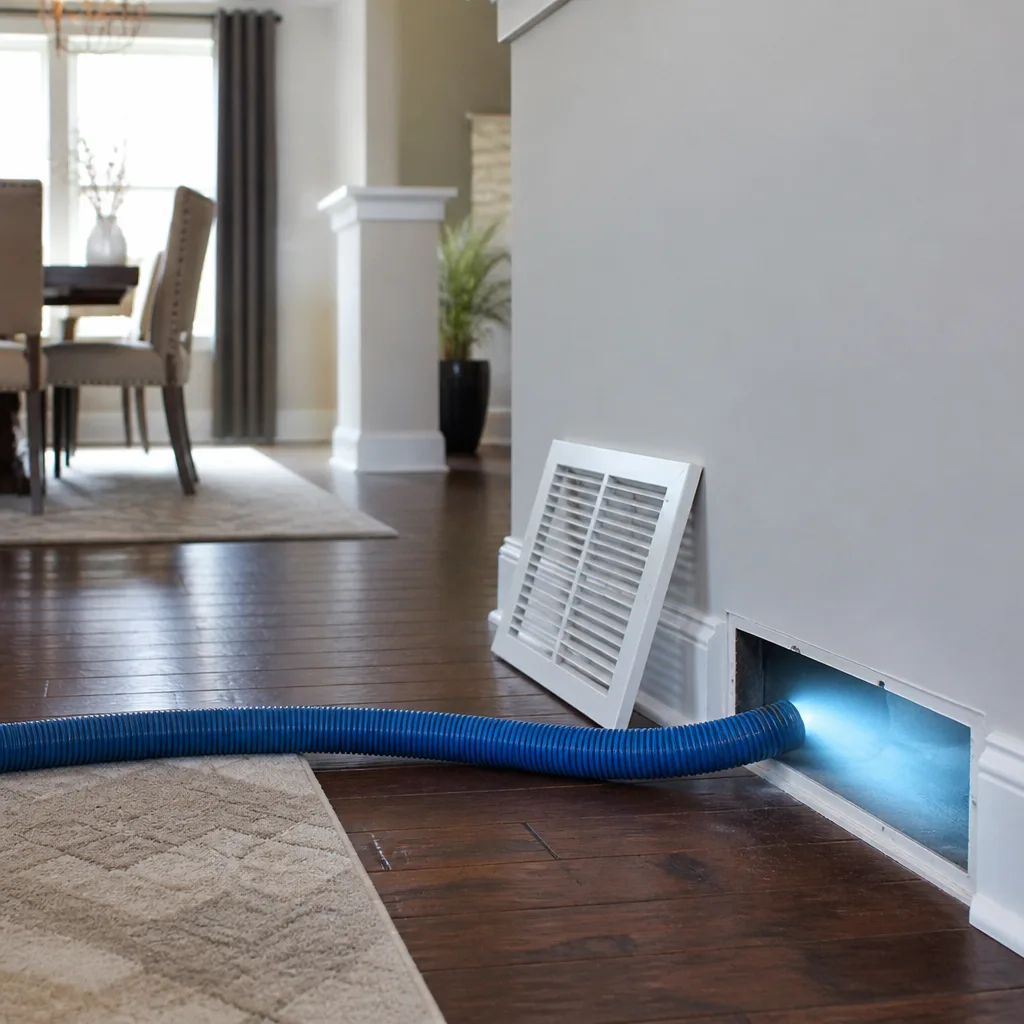 Sanitizing & deodorizing
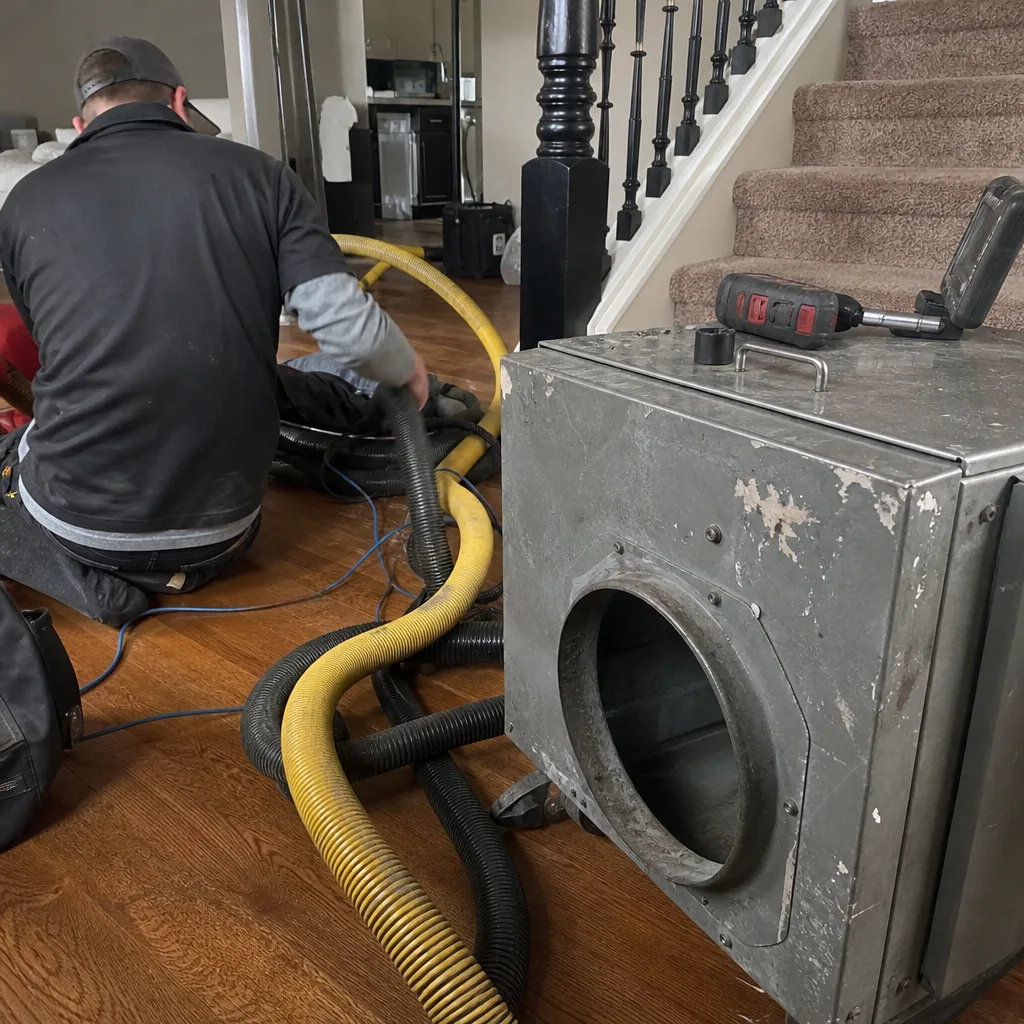
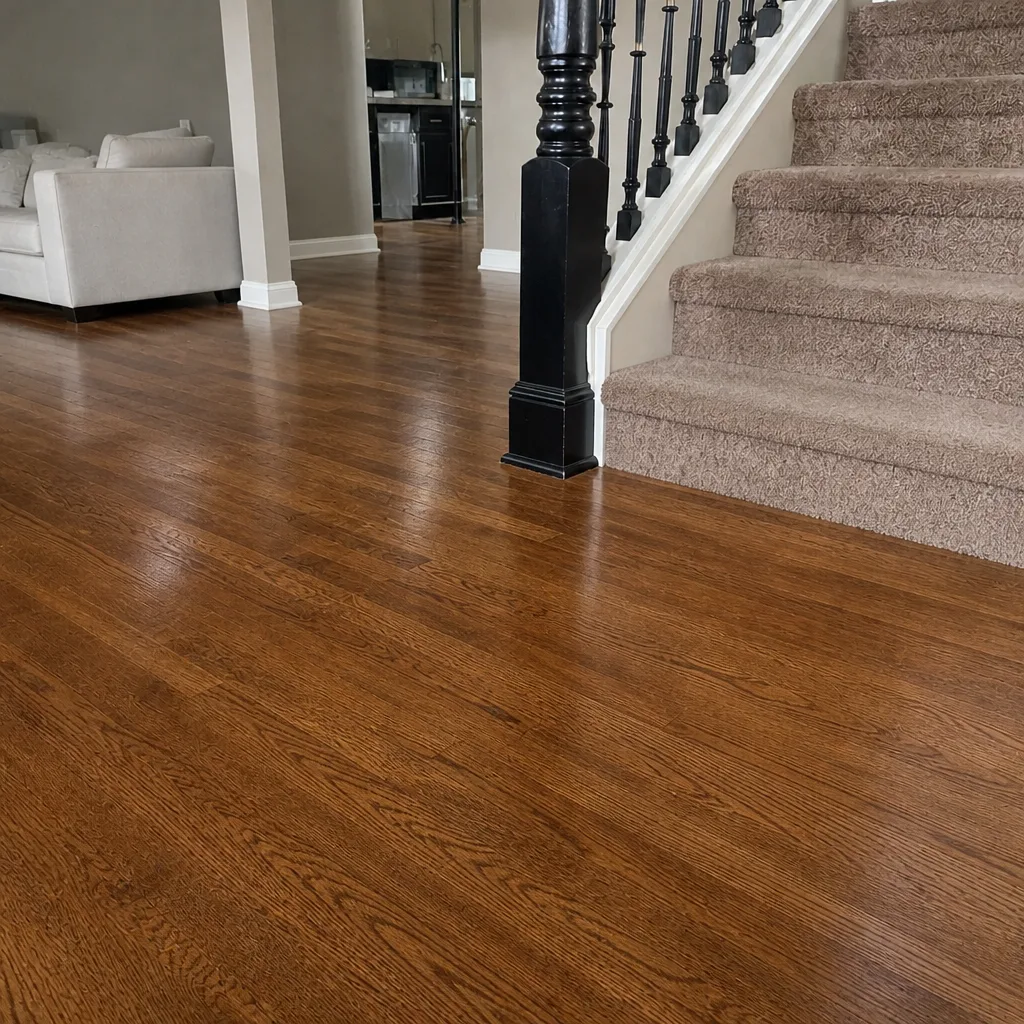
Whole-system duct and dryer vent check with before-and-after photos - you see exactly what came out of your vents
That "$99 whole-house special" is a bait ad - the real number appears once they are in your hallway, or the "clean" is a shop-vac at the register. We photograph the inside of your ducts before and after instead.
Air Duct Cleaning Maintenance Checklist for Spanish Fork Homeowners
Most duct cleaning advice treats maintenance like an oil change: pick a number of months, then repeat it forever. That approach ignores the two things that actually load your ducts here. Spanish Fork sits where Utah Valley inversion events settle into residential intakes every winter, and the same geography that gives us clean mountain air also traps particulate matter low in the valley during cold spells. One hard inversion week can leave your filter and return plenum carrying what a normal season would. This guide gives you a maintenance rhythm built around those events, your HVAC runtime, and what your own registers can tell you. You’ll learn how to inspect, log, and decide when to escalate to a professional.
Quick Answer
A practical air duct maintenance checklist in Spanish Fork combines routine observations you can do yourself every month with a professional cleaning interval that follows your HVAC runtime and local air events, not just the calendar. Most homes here should plan on a full professional cleaning every three to five years, with an earlier inspection after an inversion-heavy winter, a wildfire smoke event, a remodel, or a new pet. Filters get checked monthly and changed based on loading, not on a fixed 90-day rule. Registers get a quick visual sweep each season to catch the discoloration patterns that signal interior problems.
Styles & brands we work with
- Whole-home duct cleaning
- Dryer vent cleaning
- Camera inspection
- Sanitizing & deodorizing
Table of Contents
- Event-Triggered Checkpoints Built for Spanish Fork
- Filter Inspection Cadence by MERV Rating and Season
- Register and Grille Inspection Protocol You Can Do Yourself
- Logging HVAC Runtime Hours Instead of Counting Years
- When to Escalate From Observation to Camera Inspection
- What a Professional Cleaning Visit Should Actually Cover
- Building Your Seasonal Maintenance Calendar
- Common Mistakes to Avoid
- When to Call a Professional
- Frequently Asked Questions
Event-Triggered Checkpoints Built for Spanish Fork
Calendar-based maintenance assumes the air around your house behaves the same every week of the year. In Spanish Fork, it doesn’t. The valley’s winter inversion pattern traps cold air and particulate matter close to the ground, and your HVAC system keeps drawing that air through the return while it runs. A single sustained inversion week can load a filter and the return plenum faster than several months of ordinary spring weather. That’s why our checklist treats certain events as automatic inspection triggers rather than waiting for the next scheduled date.
The events below each deserve a filter check and a register look within a few days. None of them require a full professional cleaning on their own, but stacking two or more within a year is a strong signal to move your cleaning interval up.
- End of inversion season (late winter for most Spanish Fork homes): swap filters, look for grey or black film on return grilles, and vacuum the visible return area.
- After a wildfire smoke event: even distant smoke can settle into the valley, and it leaves fine particulate in the return path long after the sky clears.
- After any remodel, drywall work, or flooring replacement: construction dust travels farther through a duct system than most people expect and often bypasses the filter entirely.
- After adding a new pet: dander and hair accumulate in return plenums faster than the filter can capture.
- After a major spring pollen surge: cottonwood and tree pollen push through open windows and doorways, and much of it ends up in the return.
Keep a simple note each time one of these events passes. Two lines in a notebook is enough: the date and what you noticed at the registers. When you eventually call for a professional inspection, that log gives the technician a starting point rather than a blank slate. Spanish Fork homeowners who travel or leave for part of the year should also add a filter check to the day they return home.
Filter Inspection Cadence by MERV Rating and Season
The “change your filter every 90 days” rule is a starting point, not a law of physics. Filter life depends on the MERV rating, the season, and how much the system runs. A higher-MERV filter catches more, loading faster. A lower-MERV filter catches less but stays open longer. And in Spanish Fork, a filter installed in late autumn faces the inversion season head-on while one installed in early spring sees cleaner intake air for a while.
Here’s how we think about filter cadence based on the rating:
- Basic filters (roughly MERV 8 and below): check monthly, expect to change every one to three months. These are the most forgiving but also catch the least fine particulate.
- Mid-range filters (roughly MERV 9 to 13): check every two to three weeks during inversion season and wildfire smoke events, then monthly otherwise. Change when the face is visibly grey or you notice the airflow at registers drop.
- High-filtration setups (MERV 14-plus or a media cabinet): these load fastest and often need a pro inspection twice a year rather than a homeowner swap. If your system runs one, plan on a camera check of the return plenum at your next professional visit.
Two local signals matter more than the calendar. First, the color of the filter face: uniform light grey is normal, but dark bands or black patches suggest heavy loading or a source of fine particulate. Second, listen to the return grille: a whistling or rushing sound that gets louder as the filter ages means the system is straining against a loaded filter. Change it before the noise becomes your reminder.
If you’re not sure what MERV rating is installed in your system, check the filter’s cardboard frame. It’s usually printed in a small box on one end. If there’s no rating, it’s a basic filter, and you can run monthly checks without worrying. Many Spanish Fork homes that upgrade to Honeywell or Aprilaire media filtration see a longer filter interval but higher individual cost per filter, so the math works out only if the filter is inspected at the right cadence.
Register and Grille Inspection Protocol You Can Do Yourself
Your registers and return grilles are a diagnostic surface. They tell you what’s happening inside the duct system before a camera goes in. We’ve seen plenty of homeowners mistake surface dust for a duct problem, so it’s worth learning to tell the difference. A 15-minute seasonal inspection of every register in the house will catch most developing issues early.
Here’s the protocol we recommend to Spanish Fork homeowners:
- Shine a flashlight into each supply register and look at the damper blade. A light coating of dust is normal. Dark staining or film that doesn’t wipe away with a dry cloth is not.
- Examine the supply grille face itself. Uniform light dust means airflow is doing its job. Concentrated dust rings at the edges, or heavy bands across the louvres, mean dust is being pushed through rather than settled on the surface.
- Check the return grille and the filter behind it. Returns carry the heaviest load. A return grille with visible dark film, or a filter that’s black across its full face, is your earliest indicator of a ductor plenum problem.
- Wipe the grille screw heads and edges with a white cloth. Grey dust is normal. Black residue that smears is a sign of soot, smoke, or oily particulate accumulation.
- Look for streaks running from the ceiling to a supply register. Dust streaks on the drywall or ceiling near a register often trace to condensation or a leaky boot, not duct dust alone.
- Turn the system off and listen for a moment. Any whistling from a register when the system is off can indicate pressure imbalance in that branch duct.
The overarching distinction: surface dust on a grille is a housekeeping issue, while dust concentrated at the grille-to-duct transition, or dark staining on the damper, points to duct-interior issues worth investigating. Make this a seasonal habit and you’ll have a clear picture of the system before any professional visit. It also makes it easier to describe what you’re seeing when you call us or another Spanish Fork specialist.
Logging HVAC Runtime Hours Instead of Counting Years
A duct system in Spanish Fork that runs its blower 2,500 hours a year will collect contaminants faster than an identical system that runs 900 hours. The calendar doesn’t know the difference, but the blower motor does. Runtime hours are the honest baseline for setting your cleaning interval, and logging them is easier than it sounds.
Smart thermostats do this automatically. Most of the popular models have a runtime report in the app or web dashboard that shows fan-on hours by month. If your thermostat is basic, you can estimate. Take the number of months you heat or cool the house, multiply by 30, then estimate the fraction of each day the system runs. In July and August, that’s often most of the day for a Spanish Fork home with a single-stage air conditioner. In April, it may be a couple of hours. A simple monthly tally is close enough.
Here’s how to use the number:
- Under 1,000 hours a year: a professional cleaning every five years is often enough, assuming no events.
- 1,000 to 2,500 hours a year: plan on a professional cleaning every three to four years.
- Over 2,500 hours a year: check for filter loading monthly and consider a professional inspection every two years.
Then adjust for events. Every sustained inversion, wildfire smoke event, or remodel counts as a bump. Two cumulative event bumps within a year is a good reason to move the next professional cleaning up regardless of runtime. This is the point competitors miss: they quote a fixed interval and never ask how your system runs. Our technicians have up to 8 years of experience correlating runtime and local air events with actual cleaning needs, and the pattern is clear. Homes with the same square footage in Spanish Fork can need cleanings three years apart or eight years apart depending on runtime and lifestyle.
When to Escalate From Observation to Camera Inspection
The line between “keep watching” and “call a professional” isn’t mysterious, but it does require knowing what to look for. Most air duct systems fail slowly, and the warning signs are subtle enough that a homeowner can easily miss them if they’re not paying attention. Here are the specific thresholds we’ve seen warrant a camera inspection.
- Persistent musty or stale odor, especially when the system first turns on. A faint smell at startup is normal. A smell that lingers for more than a few minutes or smells strongly of moisture is not.
- Visible dark film or staining inside a supply register that doesn’t wipe off. This often means duct liner or interior moisture issues, and a camera should look deeper.
- Consistently uneven airflow between rooms. If the dining room always runs cold and the primary bedroom always runs hot, it can be a duct design issue, but it can also be a blockage or leak worth inspecting.
- Allergy or respiratory symptoms that get worse when the system runs. This is the homeowner’s cue to stop guessing and get a professional inspection.
- Rising energy bills that don’t track with temperature or usage. Leaky ducts waste conditioned air. A camera inspection along with a duct seal check is the way to find out.
- Visible debris in a return plenum or in the furnace closet. If you can see it from the grille, a professional should be looking further.
A camera inspection isn’t the same as a cleaning. A proper inspection means the technician runs a borescope or video feed down the main trunk and at least one or two branch runs, looking for interior liner damage, disconnected joints, and ongoing moisture. From there, the decision about whether to clean, repair, or just reseal is made on evidence rather than on a fixed schedule.
If your system passes inspection, don’t be surprised if the recommendation is “not yet.” It’s a fair result. Our approach here is to use professional-grade equipment for the inspection itself, including Abatement Technologies negative-air controls when a room needs to be contained during the work. A duct cleaning is a scheduled job, not something to buy on a coupon. Getting the timing right matters more than getting it done soon.
What a Professional Cleaning Visit Should Actually Cover
A duct cleaning that stops at “we vacuumed the visible parts” leaves the majority of the system untouched. The full-truck professional systems are built to reach what a shop-vac can’t, and the checklist below is what a proper visit should include in any Spanish Fork home. If a company’s version of “duct cleaning” is a vacuum attached to one return grille, you’re paying for surface work.
Here’s what our own process includes, and what we’d want any specialist to cover:
- Source removal, not just agitation. A rotary-brush system (we use Rotobrush as our primary tool) loosens debris inside the duct walls while a high-powered vacuum pulls it out at the same time. Sandblasting debris without extraction just redistributes it.
- HVAC unit level cleaning. The blower, evaporator coil, and return plenum need to be addressed. Nikro extraction equipment is designed for this stage, and it’s the difference between a duct cleaning and an HVAC cleaning.
- Containment during the work. Abatement Technologies negative-air and HEPA filtration keeps dust from spreading into the living space. This is the same equipment restoration contractors use in mold remediation, and for the same reason.
- Register and grille cleaning. Every supply and return face should be cleaned, not just the ones the technician can reach without moving furniture.
- Duct repair and sealing where needed. Leaks that waste energy and re-contaminate the system should be identified and addressed. A duct cleaning without a leak check is a partial job.
- Camera verification. Before the visit wraps, the technician should show you the inside of at least one duct run, before and after. Ask for it if it’s not offered.
Post-cleaning upgrades are where a full-system visit really pays off. Filtration upgrades (Honeywell and Aprilaire media cabinets are the two we install most) and duct sealing both extend the interval before the next cleaning and improve what actually reaches your air. This is also the moment when a professional can recommend Guardsman protective treatment for the duct interior if heavy contamination was found. Our air duct cleaning page covers the visit-and-equipment process in more detail.
Building Your Seasonal Maintenance Calendar
A maintenance calendar keeps you from relying on memory. The version below is built for Spanish Fork’s specific seasonal pressures: a long heating season with inversion weeks, a short cooling season with high runtime, and two pollen transitions. Adjust the dates to your own schedule.
- Late autumn (October to November): fresh filter in, register inspection, runtime log started for the winter.
- Midwinter (January to February): midseason filter check, register look, note any inversion events in your log.
- End of heating season (March): filter swap, return plenum vacuum, review the log for a spring call if events stacked up.
- Late spring (May): pollen surge filter check, register inspection, note the cleanouts.
- Summer cool-down (July to August): another filter check, register inspection, and a listen for airflow noise at the return.
- Early autumn (September): post-summer filter swap, log the runtime hours from the smart thermostat or your estimate.
Add the event triggers from the first section on top of this. A wildfire smoke event in late summer or a planned remodel any time of year gets its own entry, and a professional camera inspection should be scheduled if two or more triggers stack within a year.
Two services in your calendar that often get skipped: dryer vent cleaning once a year (lint buildup is a fire risk, not just an efficiency issue), and HVAC cleaning at the same time as your duct cleaning so the blower and coil get addressed together rather than separately. Las Palmas, Palmyra, and the neighborhoods closer to the Spanish Fork River all sit at slightly different elevations and get slightly different airflow and loading patterns. If your home is on the east bench or closer to the canyon mouth, you may run your system harder in summer than a home in the valley floor, and your runtime log will show it.
See the difference
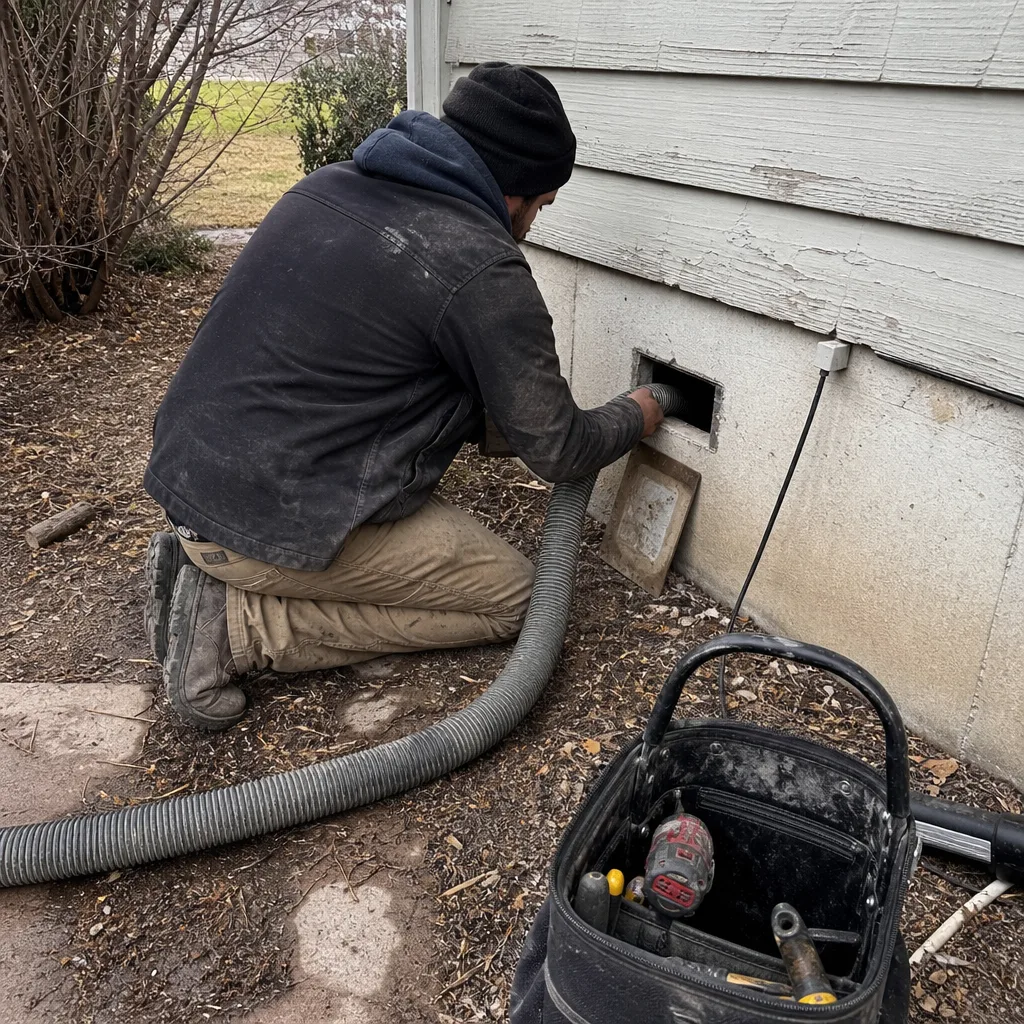 Before
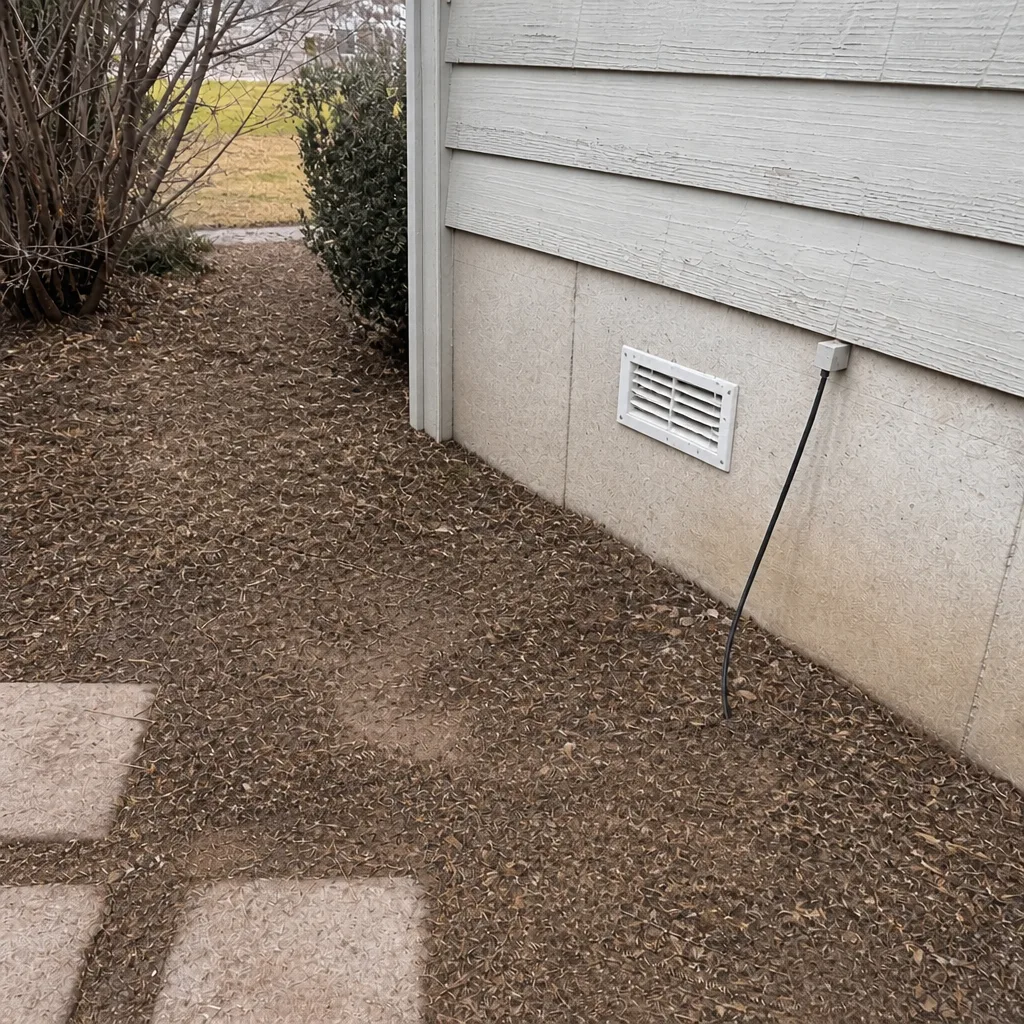 After
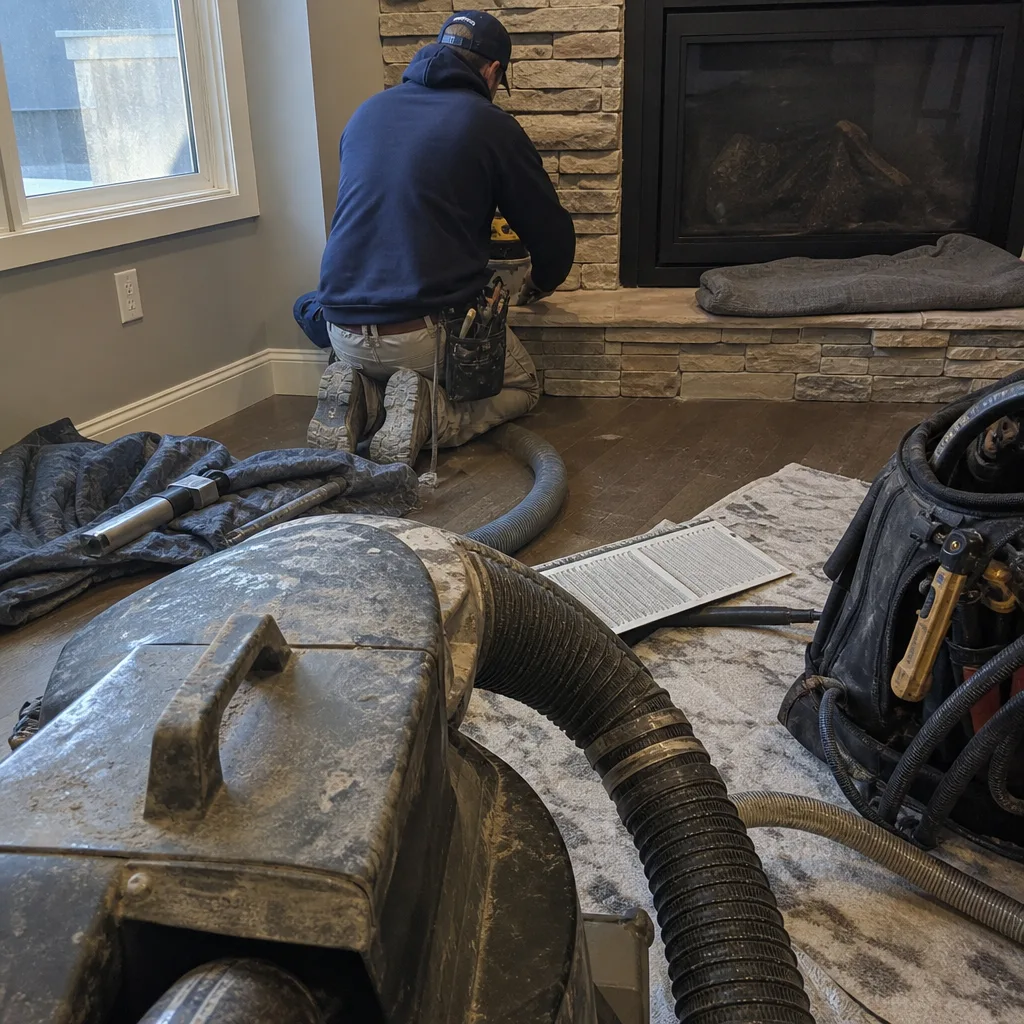 Before
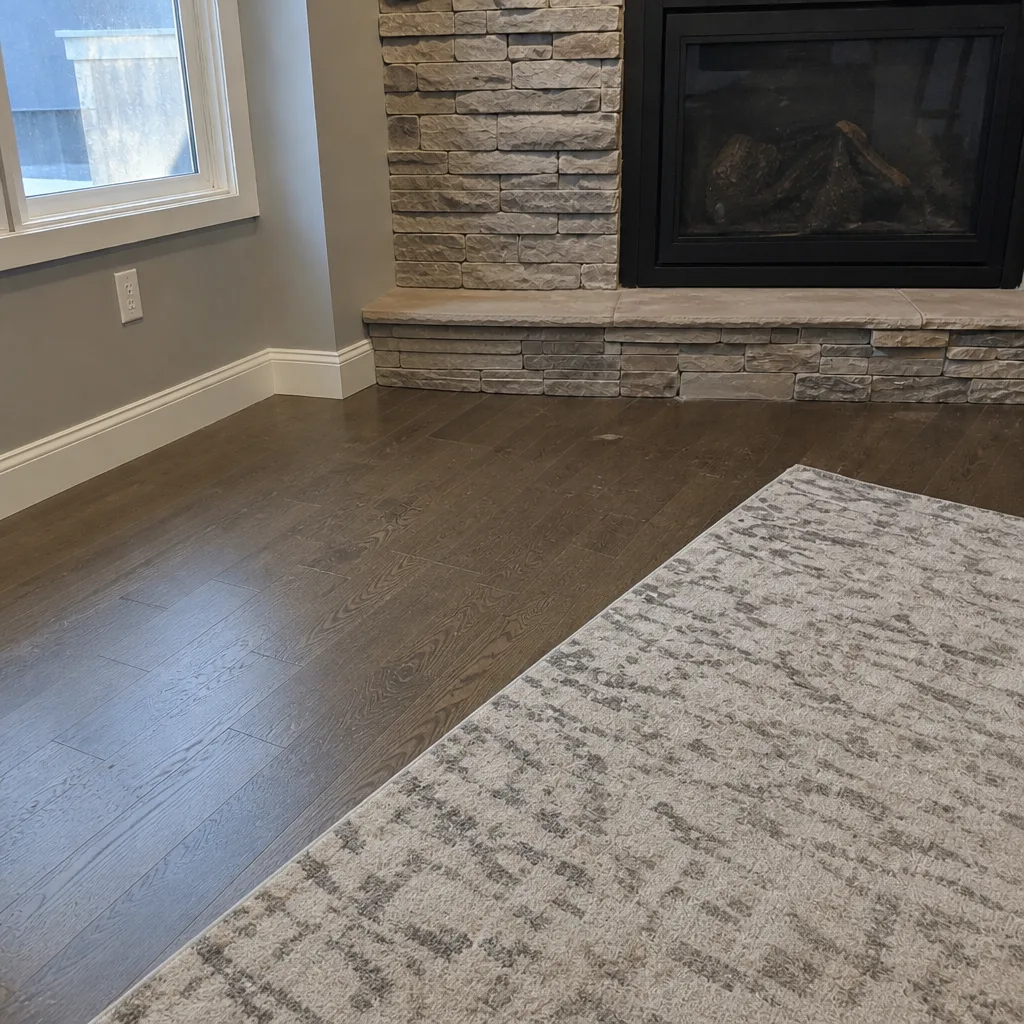 After
 Before
 After
Key Takeaways
- Maintenance timing in Spanish Fork should follow events and runtime, not just the calendar.
- Filter inspection every month, change based on loading and MERV level, not a fixed 90-day rule.
- Register and grille inspection is a homeowner task, and it catches interior issues early.
- Runtime hours are the honest baseline. Under 1,000 hours per year means a longer interval; over 2,500 means a shorter one.
- A camera inspection comes before a cleaning, not after, when a threshold is crossed.
- Full-system visits cover ducts, HVAC, sealing, and post-cleaning filtration, not just visible ductwork.
Common Mistakes to Avoid
- Treating 90 days as the filter rule. In Spanish Fork, a filter installed before inversion season can load in six weeks while one installed in spring can last three months. Check monthly, change based on the face and the airflow noise.
- Ignoring the return plenum. Returns carry the heaviest load and most homeowners only look at supply grilles. The return is where musty odors and dark film usually show up first.
- Buying a cheap cleaning based on a coupon price. The low teaser figure tends to grow once the technician is on site, which is why we quote one flat price per system, agreed before work starts, with before-and-after photos of your own ducts.
- Skipping the leak check. A duct cleaning that doesn’t identify leaks wastes the visit. Leaks re-contaminate the system and waste energy, and most duct-only cleaners don’t check for them.
- Cleaning ducts without cleaning the HVAC unit. The blower and evaporator coil are part of the same system. Address them together or the ductwork loads right back up.
- Running a high-MERV filter in a system not rated for it. A filter that’s too restrictive can strain the blower. Match the rating to what the system was designed for.
- Forgetting the dryer vent. Annual dryer vent cleaning is a fire-safety item, not just an efficiency one, and it’s easy to overlook because it’s behind the dryer.
When to Call a Professional
Call a professional when any three of these are true: your filter is loading faster than normal despite regular changes, you notice musty odor at startup that lingers, several rooms have persistent airflow problems, someone in the house has worsening allergy symptoms tied to the HVAC, or your log shows two or more major air events stacked within the last year. A camera inspection and full-system cleaning visit will answer the question definitively, and in most cases the visit includes an honest “not yet” if the system is in good shape.
Spanish Fork Air Duct Cleaning offers free estimates in Spanish Fork. Call (866) 937-8037. We answer 24/7. Fast dispatch from 7am to 7pm, Sunday through Friday. Our Spanish Fork Air Duct Cleaning team handles duct cleaning, HVAC cleaning, duct repair and sealing, dryer vent cleaning, and post-cleaning filtration and sanitizing in a single visit, which means you’re not coordinating three contractors. The local pro we connect you with is licensed and insured as their state requires, and we stand behind the work with a satisfaction guarantee.
Frequently Asked Questions
Most Spanish Fork homes should plan a professional cleaning every three to five years, with an earlier inspection after a hard inversion season, a wildfire smoke event, or a remodel. Runtime hours and local air events matter more than the calendar year. If you run your system heavily in summer or heat through long inversion weeks, the shorter end of that range applies. Call (866) 937-8037 for a free estimate if you’re not sure where your home lands.
Start with the filter face and the return grille. A loaded filter is the most common cause of a slowdown in airflow and a rise in runtime, and it’s the easiest thing to rule out. If the filter is clean and the return plenum shows dark staining, then it’s time to look at the ducts and the HVAC unit together. Call (866) 937-8037 for an estimate if the filter isn’t the answer.
Yes. Inversion events trap particulates near the ground, and your HVAC system keeps pulling that air through the return. The filter catches most of it, but fine particulate reaches the return plenum and the duct surfaces behind the filter. It’s one of the reasons our maintenance rhythm is event-triggered rather than calendar-only. Call (866) 937-8037 to discuss what a post-inversion inspection would cover.
Often yes, and at minimum you should inspect. Drywall dust and construction particulate migrate through the air and the return system far more than most people expect, and they can bypass the filter. A register inspection a few days after the work wraps will tell you a lot. Call (866) 937-8037 for an estimate if you want a professional camera check.
Low quotes often cover only part of the system: the visible return grille and a light vacuum of the trunk. Full-system visits include the blower, coil, every supply and return, and a leak check, plus professional extraction equipment like our Nikro setup rather than a shop-vac. Our approach is one flat price per system, agreed before work starts, with before-and-after photos. Call (866) 937-8037 for a free estimate so you can compare scope, not just the bottom line.
Ask for before-and-after photos of your own ducts, and a walk-through of at least one duct run on camera at the end of the visit. That’s the standard we work to, and it’s the honest way to close out a duct cleaning. Call (866) 937-8037 to schedule an estimate or a camera inspection if you’ve had a cleaning that you’re not sure about.
Only if your system was designed for it. Higher-MERV filters catch more fine particulate but restrict airflow more, which can strain the blower in a system sized around a basic filter. Check with a professional before stepping up more than one or two ratings. Call (866) 937-8037 if you want an honest recommendation based on your actual system.
Yes. We identify and repair leaks that waste energy and re-contaminate the ducts during the same visit as the cleaning, which most duct-only cleaners skip. That means the system is sealed as well as cleaned. Call (866) 937-8037 to schedule a combined estimate.
The Bottom Line
An air duct maintenance checklist worth following is the one that matches your house, not the one that runs on a fixed calendar. Track your runtime hours, note your local air events, inspect your registers seasonally, and let filters load naturally rather than changing them on a fixed day count. When the log shows stacked triggers or your register check turns up staining that won’t wipe off, a professional camera inspection is the right call. Spanish Fork Air Duct Cleaning covers the full system in one visit: ducts, HVAC, sealing, and post-cleaning filtration, using Rotobrush and Nikro professional equipment with Abatement Technologies containment. Call (866) 937-8037 for a free estimate. We answer 24/7. Fast dispatch from 7am to 7pm, Sunday through Friday.
Written by the team at Spanish Fork Air Duct Cleaning.