
Last updated November 23, 2026
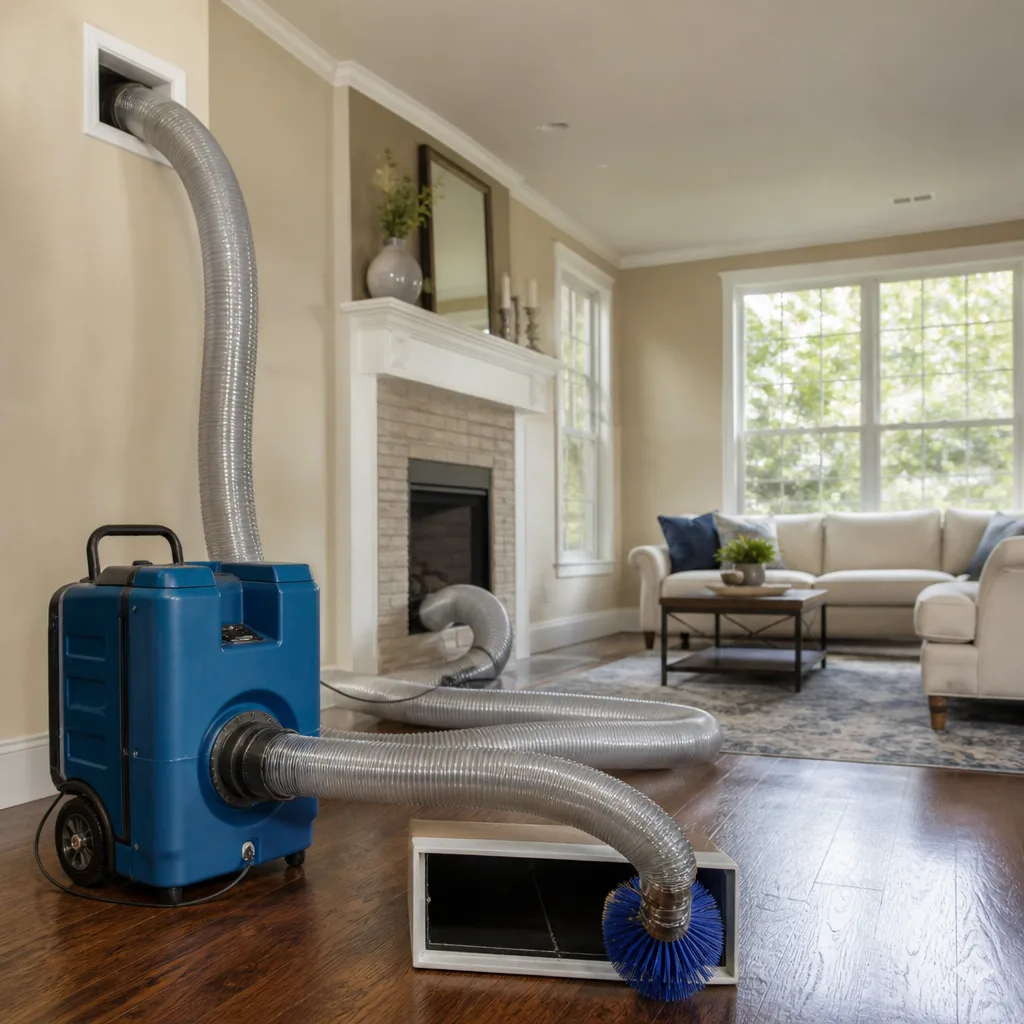 Whole-home duct cleaning
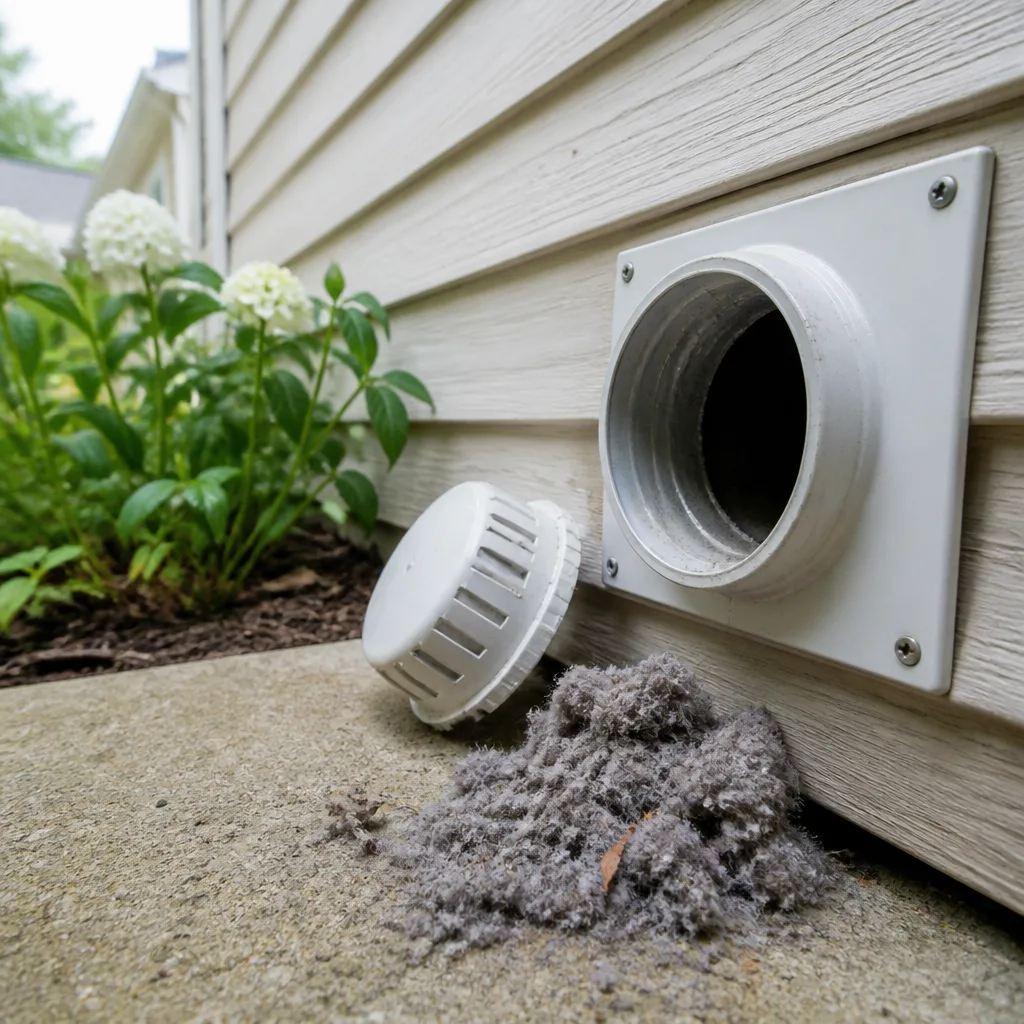 Dryer vent cleaning
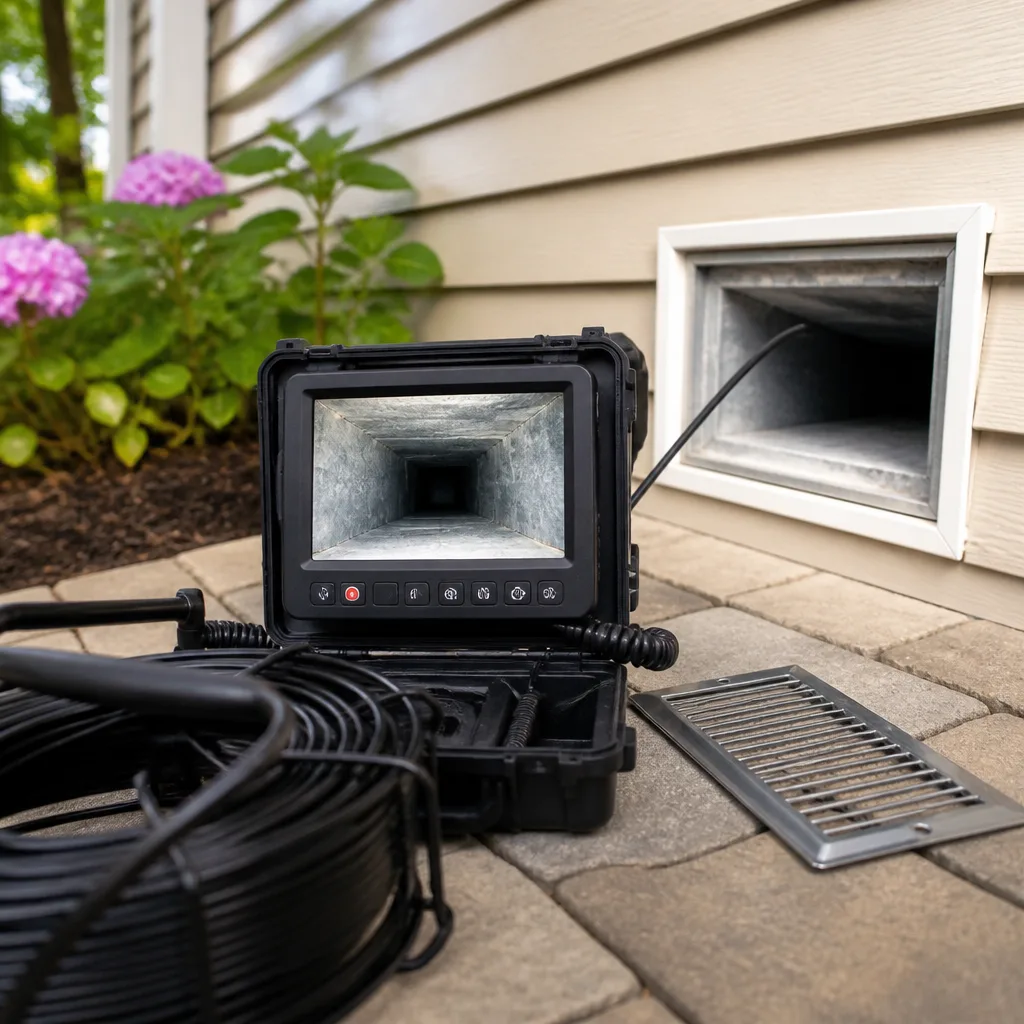 Camera inspection
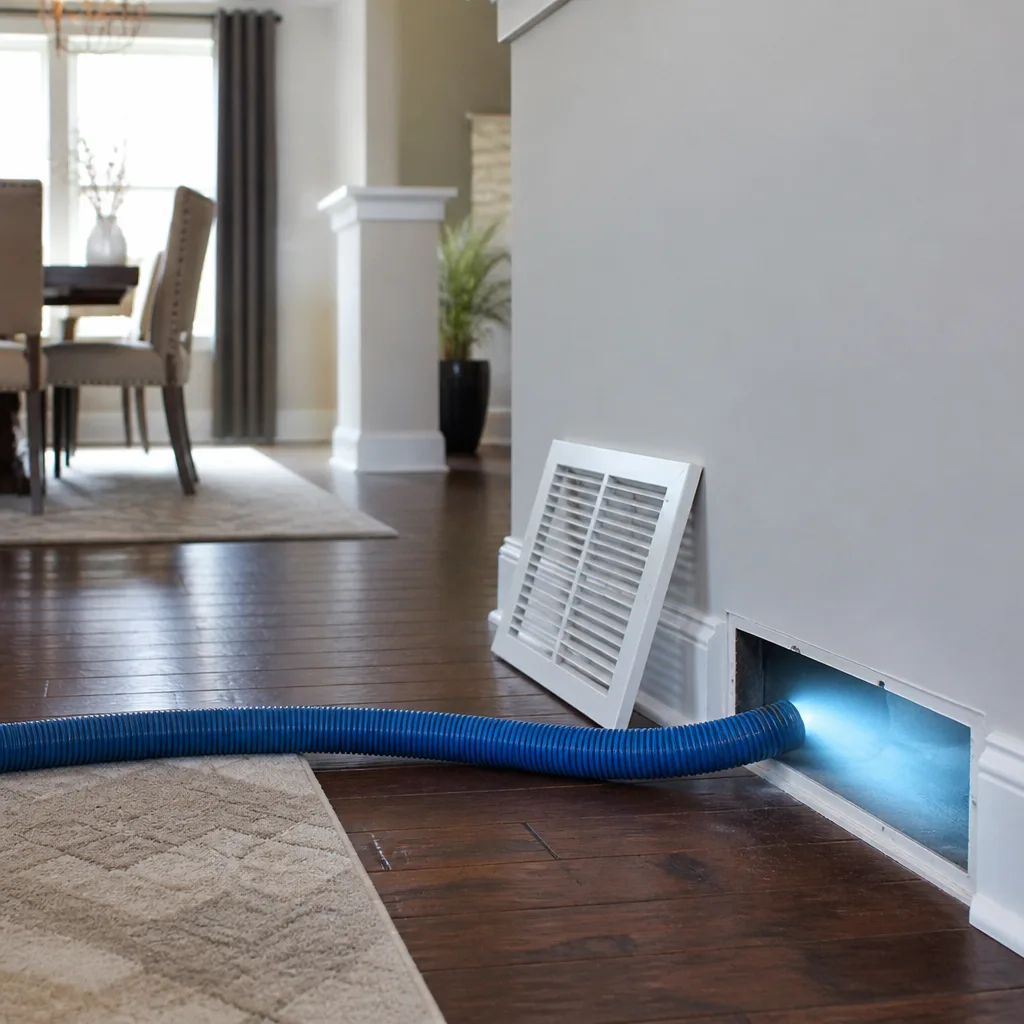 Sanitizing & deodorizing
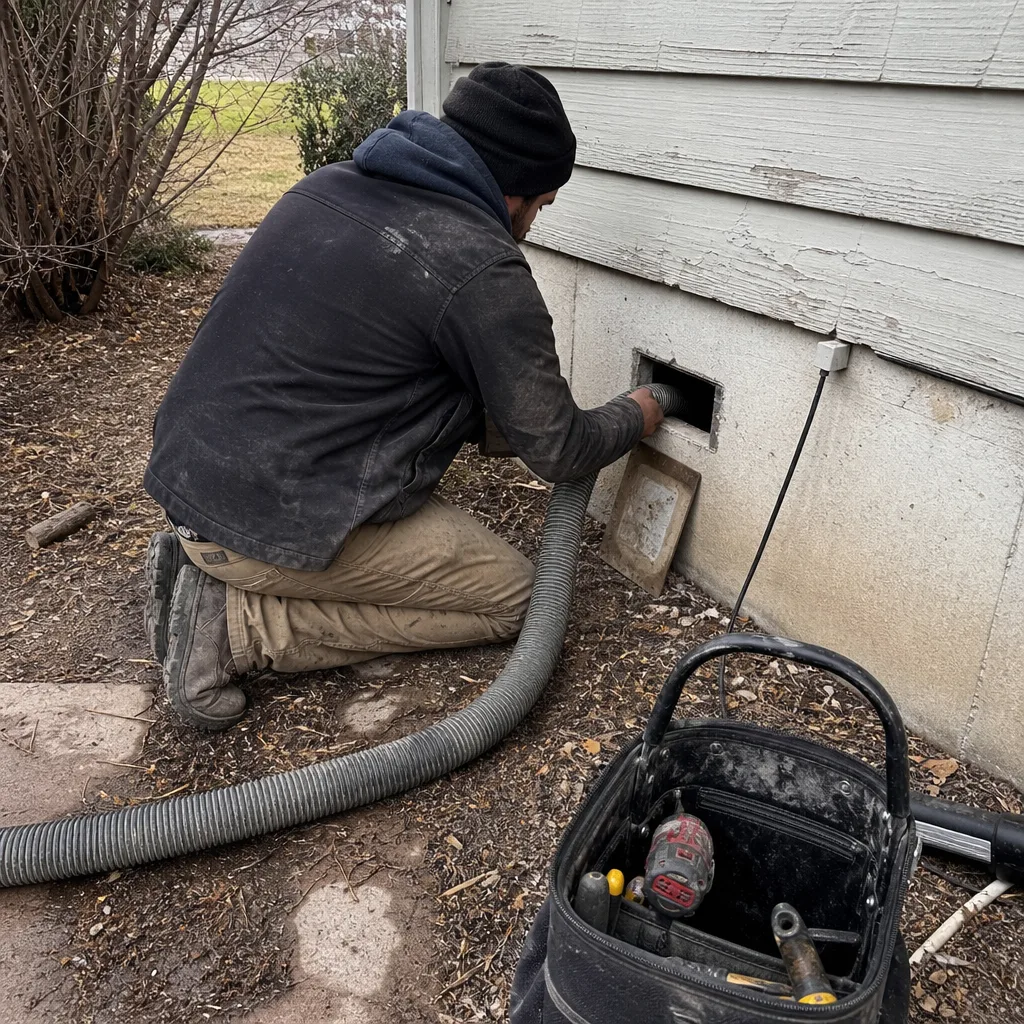
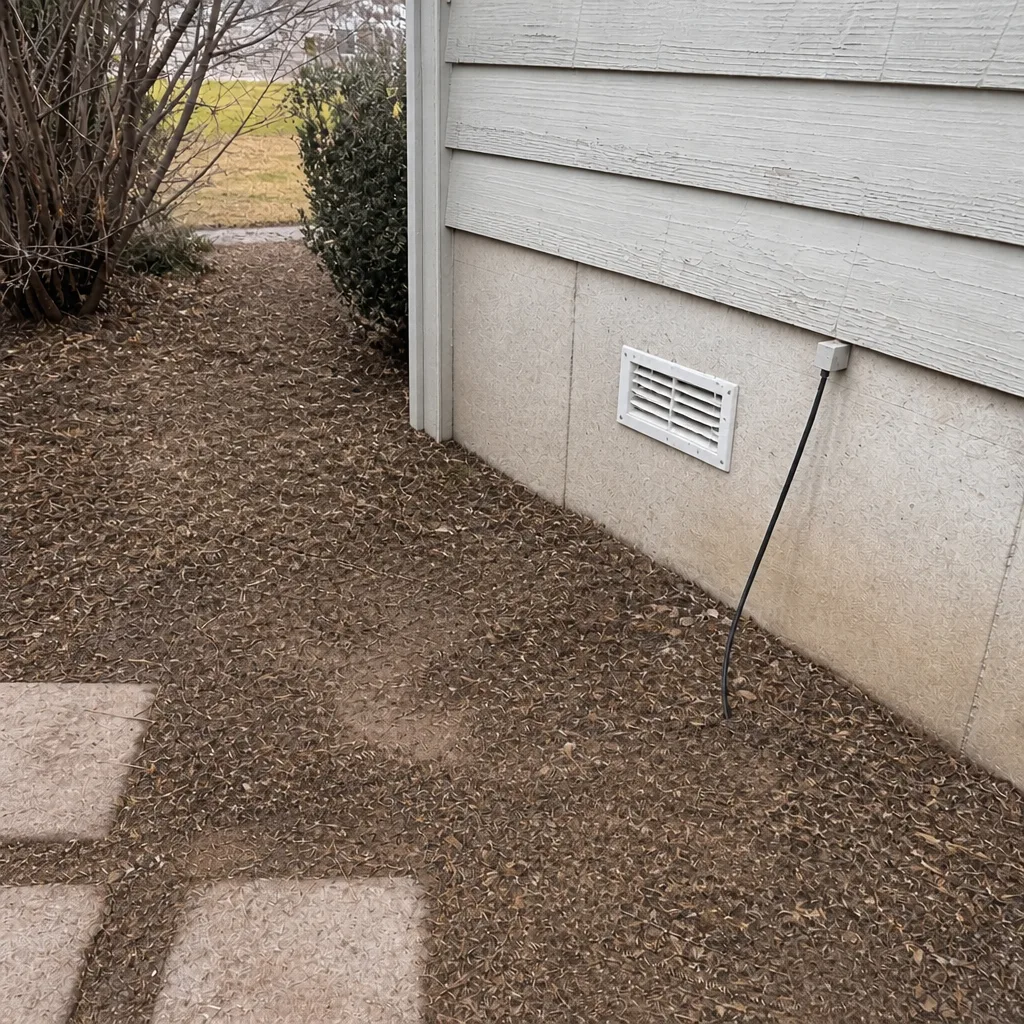
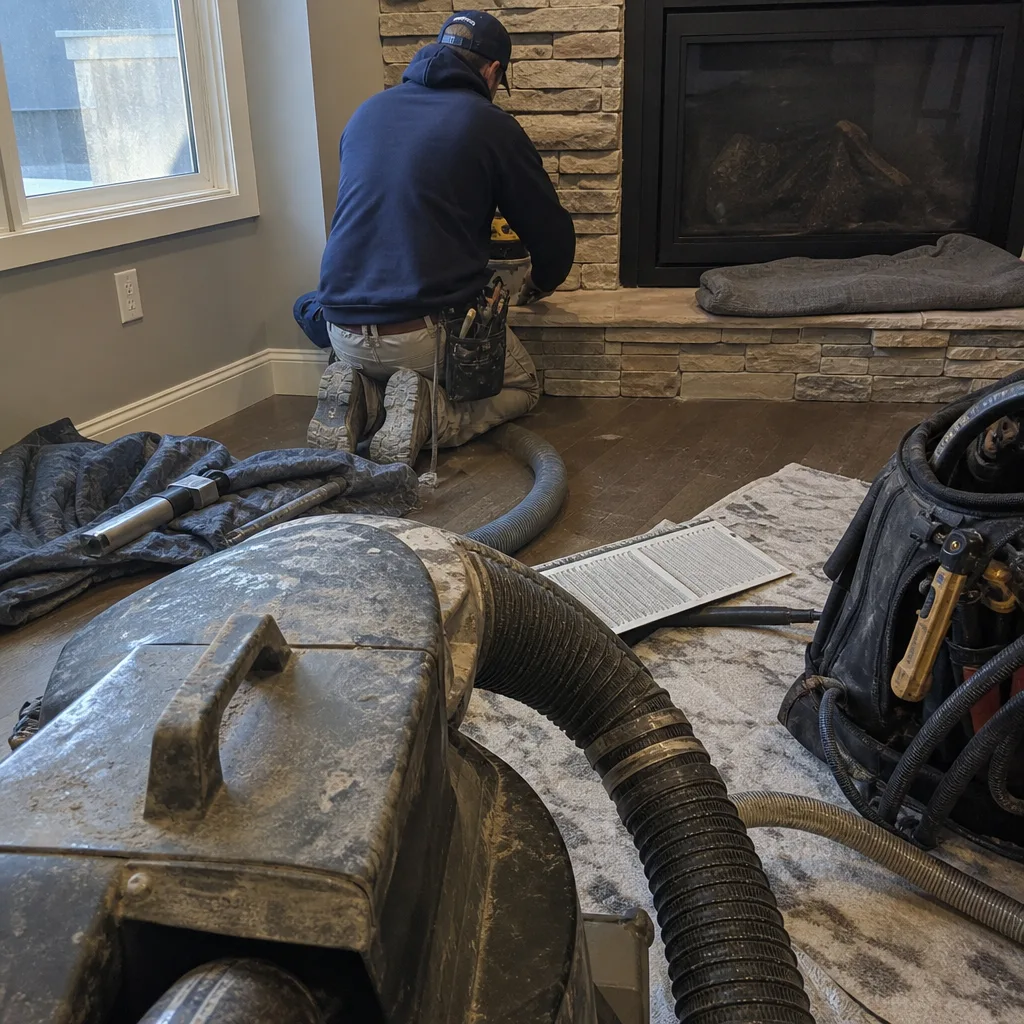
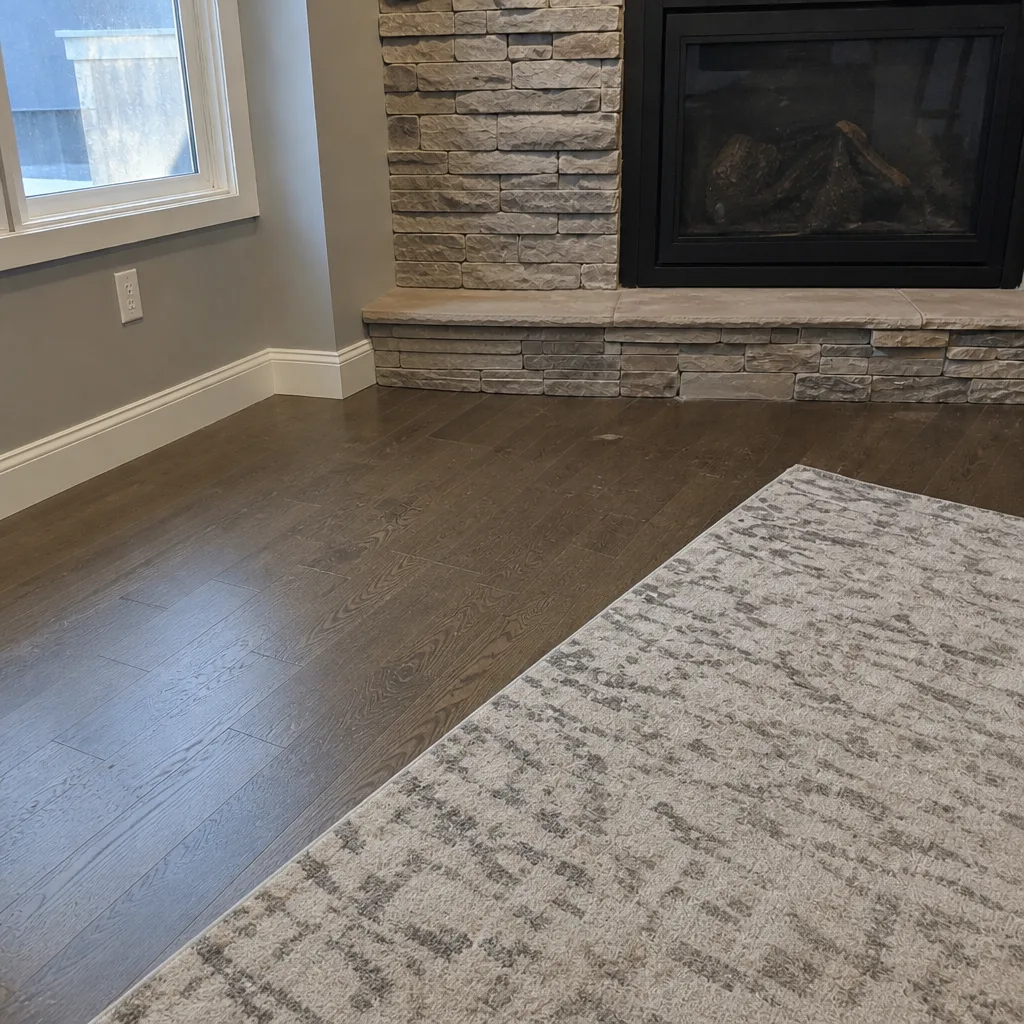
Whole-system duct and dryer vent check with before-and-after photos - you see exactly what came out of your vents
That "$99 whole-house special" is a bait ad - the real number appears once they are in your hallway, or the "clean" is a shop-vac at the register. We photograph the inside of your ducts before and after instead.
The Complete Guide to Air Duct Cleaning in Spanish Fork
Most people assume duct cleaning is duct cleaning. A vacuum goes in, dust comes out, done. That assumption is where a lot of money gets wasted in Spanish Fork, because the cleaning method has to match the duct system, and a lot of Utah County homes built between 1995 and 2010 have long runs of flex duct. Flex punishes the wrong equipment. A spinning brush pushed too hard through a soft corrugated wall can snag, shred, or simply skip the ridges where debris packs in, and a shop-vac pulling at the register end never reaches it at all. This guide maps the process to the actual duct types found in Spanish Fork homes, explains the equipment chain that makes a cleaning real, and shows you what “done right” looks like before anyone shows up with a hose.
Styles & brands we work with
- Whole-home duct cleaning
- Dryer vent cleaning
- Camera inspection
- Sanitizing & deodorizing
Quick Answer
Air duct cleaning in Spanish Fork means removing accumulated dust, debris, and contaminants from the supply and return ducts, the air handler, and the connected HVAC components using professional-grade equipment – a source-removal vacuum, a rotary brush system, and negative-pressure containment working together. It’s not a vacuum passed over the registers. Done correctly, it restores airflow, reduces dust and odor, and lets you verify the result with before-and-after evidence. The method has to match your duct type, which is why identifying your system comes first.
Table of Contents
- How to Identify Your Duct System Type
- The Equipment Chain: What Each Tool Actually Does
- Spanish Fork Factors That Affect Your Ducts
- Step by Step: How a Proper Cleaning Runs
- What a Completed Job Inspection Should Show You
- Why Cleaning Without Sealing Undoes the Work
- NADCA Standards and How to Verify Them
- What Air Duct Cleaning Costs in Spanish Fork
- Common Mistakes to Avoid
- When to Call a Professional
- Frequently Asked Questions
How to Identify Your Duct System Type
The single most useful thing a homeowner can do before booking a cleaning is figure out what kind of ducts the house has. The material dictates which cleaning method works and which one causes damage. Here’s what to look for.
Flex duct is the silver, ribbed, flexible tubing you’ll see in attics and crawlspaces. It’s a wire helix wrapped in plastic and insulation. Spanish Fork homes built in the 1995 to 2010 window often have long, sprawling flex runs snaking across the attic floor, and those corrugated interior ridges are exactly where fine dust settles and compacts. Flex requires controlled rotary brushing at moderate pressure plus strong source removal, because soft walls punish anything aggressive.
Sheet metal duct is the rigid, shiny galvanized steel trunk-and-branch system common in older homes. It’s durable, it takes a rotary brush well, and it’s easier to verify visually because the surfaces are smooth and accessible. If your home has a central metal trunk running down the hallway with branches off to each room, you have a trunk-and-branch layout, and that’s a straightforward cleaning.
Fiberboard duct looks like compressed gray board, often foil-faced. It’s fragile. Abrasive brushing can break it down and release fibers, so fiberboard demands gentler contact cleaning and lower brush speeds with careful vacuum control. Not every contractor adjusts for this, which is one reason a proper system assessment matters more than a quick quote.
There’s also the question of layout. Trunk-and-branch systems move air through a main duct and out to branches. Radial systems run individual ducts directly from the air handler to each room. The layout changes how air pressure behaves during cleaning and where debris collects. Ask whoever cleans your system how they’ll handle your specific configuration, and listen for a real answer instead of a generic one.
The Equipment Chain: What Each Tool Actually Does
A proper duct cleaning is not one machine. It’s a chain of equipment where each piece does a specific job, and if any link is missing, debris either never gets loosened or never gets captured. This is the part most homeowners never get explained, and it’s the part that separates professional work from a coupon special.
Here’s what each link does:
- Source-removal vacuum (Nikro or equivalent). This is a high-volume negative-pressure machine connected at the main trunk or air handler. It creates a suction field across the whole system so that loosened debris moves toward the machine instead of into the living space. A shop-vac has nowhere near the airflow to do this.
- Rotary brush system (Rotobrush). The industry-benchmark tool for loosening caked debris from duct walls. A flexible shaft drives a spinning brush head through the runs, agitating dust off the surface so the vacuum can pull it away. It gets into the ridges flex duct hides and the corners metal trunking collects. Our technicians have up to 8 years of experience running this equipment, and knowing the right brush pressure for each material is most of the skill.
- Negative-pressure containment (Abatement Technologies). HEPA filtration and negative-air equipment keep the work area under containment so contaminants pulled from the system don’t drift back into the home. This is the same class of equipment restoration and mold crews rely on, and it’s why a properly contained cleaning doesn’t leave a dust haze in the hallway.
Those three working together are the difference between moving dust around and actually removing it. If a contractor shows up with only a vacuum, or only a brush with no source removal behind it, the process is incomplete no matter how long they stay. Professional-grade equipment, not shop-vac shortcuts – that’s the standard to hold anyone to. When you look for air duct cleaning in the area, ask exactly which machines will be on site before you book.
Spanish Fork Factors That Affect Your Ducts
Ducts don’t get dirty in a vacuum (pun intended). The local environment shapes what ends up in them and how densely it binds, and Spanish Fork has a few conditions worth understanding.
- High desert dust load. Spanish Fork sits in a dry, dusty stretch of Utah Valley, and spring wind events throw fine particulate into the air that finds its way into return ducts. That dust is finer than what you’d see in a wetter climate, and fine dust is what compacts inside flex ridges and coats the air handler coil.
- Seasonal wildfire smoke. Utah Valley smoke episodes push fine ash and combustion particles into homes, especially when windows are open during shoulder seasons. Those particles are small enough to ride through standard filters and settle in the duct walls.
- Hard-water condensation effects. Spanish Fork’s water is mineral-heavy, and the moisture that HVAC systems produce contains those dissolved minerals. Over time, condensation and mineral residue help dust stick to interior surfaces and turn loose dust into a cemented layer that a light vacuum can’t lift.
Put together, these factors mean Spanish Fork duct systems tend to build that harder, bound layer faster than you might expect for a home that isn’t visibly dusty. It’s one reason a periodic professional cleaning with real agitation matters here, and why a quick pass with a consumer vacuum won’t get the ridge deposits loose. Our full approach to the main service covers this, and you’ll find more on HVAC cleaning if you want the air handler and coil side handled at the same time. If your dryer has been venting slowly too, dryer vent cleaning is the companion job for the same fine-lint problem.
Step by Step: How a Proper Cleaning Runs
Knowing the sequence lets you judge whether the person in your house is following a real process or improvising. A complete professional cleaning follows a predictable order, and every step has a reason.
- System assessment. Identify duct type (flex, sheet metal, fiberboard), layout (trunk-and-branch or radial), and access points. This is where the method gets chosen, not after the machines are running.
- Containment setup. Negative-air and HEPA filtration equipment go in place, registers are sealed or worked under containment, and the work zone stays controlled so loosened debris can’t escape into the home.
- Source-removal vacuum connection. The high-volume vacuum ties into the main trunk or air handler and creates negative pressure across the whole system.
- Agitation. The rotary brush travels each run, loosening debris from walls and ridges so the vacuum can capture it. Brush pressure is matched to the duct material at every step.
- Air handler and coil cleaning. The blower compartment and coil get cleaned while the system is open, because that’s where a lot of the dust gathers before it ever reaches the rooms.
- Sealing and repair. Leaks found during the process get sealed so the system holds the pressure and doesn’t re-draw dirt from an unsealed attic or crawlspace.
- Verification. Camera inspection of duct interiors, a visual check of access panels, and a before-and-after comparison give you proof of what changed.
- Sanitizing and filtration upgrade. Optional treatment with Guardsman products, and if the system needs better filtration or humidity control, a Honeywell or Aprilaire component can go in the same visit rather than requiring a second appointment.
That final step is where the full-system scope pays off. Addressing Spanish Fork Air Duct Cleaning as a whole-system job means the ducts, the air handler, the filtration, and the sealing all get handled together. One visit, full system – no coordinating three different vendors and hoping they talk to each other.
What a Completed Job Inspection Should Show You
You shouldn’t have to take the work on faith. A legitimate cleaning ends with evidence, and the contractor should hand it to you without being asked. Here’s what a completed inspection looks like.
- Camera verification. A camera run through the ducts before and after shows the actual interior surface. Ask to watch the after footage, not just trust a verbal “all clean.”
- Airflow differential. A before-and-after measurement of airflow at the registers tells you whether the system breathes better than it did. Restricted ducts show up here as a real, measurable difference.
- Access panel check. The panels that were opened to reach the system should be resealed cleanly. Gaps left behind at access points are leaks, and leaks bring dirt back in.
- Coil and blower condition. A visual check of the air handler after cleaning confirms the debris is gone from the components, not just the ducts.
- Documentation. Before-and-after photos of the actual system, not stock images, attached to the job. That’s the record that the work happened at all.
Those last two points answer the worry that lingers in this industry: how do you know the work was actually done? You know because you can see the evidence on your own ducts, not because you were told.
Why Cleaning Without Sealing Undoes the Work
Here’s a step most duct-only cleaners skip entirely: sealing. A duct system that leaks pulls air from wherever it can, and in Spanish Fork that often means attic or crawlspace air loaded with dust and insulation fibers. You can clean every run perfectly, and if the system is still leaking, it will draw that dirt straight back in. The cleaning wasn’t wasted, but it gets undone faster than it should.
Sealing during or right after a cleaning does two things at once. It stops the re-contamination path so the clean result lasts longer, and it closes up the gaps that waste energy by letting conditioned air escape before it reaches a room. Finding leaks is part of a proper assessment, and repairing them is part of a complete job. If a contractor cleans and never mentions the leaks they found, that’s a sign the scope was too narrow.
Cleaning and sealing belong in the same visit for the simple reason that the system is already open, contained, and under vacuum. Doing it later means paying to set all of that up again. This is what we mean when we say we don’t just clean – we seal, repair, and verify. The result is a system you can trust to stay clean for a reasonable stretch rather than a temporary fix.
NADCA Standards and How to Verify Them
The National Air Duct Cleaners Association publishes standards for how duct cleaning should be performed, including its Assessment, Cleaning, and Restoration guidance. Those standards exist because the industry has a lot of operators who spray a marketing line about following them without doing the actual work. Citing NADCA means nothing on its own. Here’s how to tell whether a contractor actually follows the standard.
Ask direct questions and listen for specifics:
- “How do you verify the system is clean?” A standard-following contractor describes camera inspection and before-and-after evidence. A marketing-only one says “we go through it thoroughly.”
- “What protects my home during the cleaning?” The answer should involve negative-pressure containment and HEPA filtration, not a plastic drop cloth.
- “What happens to access openings?” A real answer involves proper sealing afterward. A vague answer means the leaks stay.
- “Which equipment will you bring?” Names or types of source-removal vacuum, rotary brush, and containment equipment. If it’s “our van has everything,” ask for the specifics.
- “Will you document the job?” Photos of your own system before and after, provided to you.
The pattern is that a contractor who follows the standard can describe every step in technical terms without hesitation. One who only cites it as a selling point falls apart under specific questions. Use the questions above as a screen before you book, and the difference becomes obvious quickly. For a broader directory of what to expect from the industry bodies, the national association publications are the reference point, and legit operators know them.
What Air Duct Cleaning Costs in Spanish Fork
Pricing for duct cleaning varies with the size of the system, the number of runs, the duct material, and whether sealing or an air-quality upgrade is included. Here are typical estimated ranges for the Spanish Fork market, and the written estimate you receive sets the final price.
- Standard single-system duct cleaning: $350 to $700, depending on run count and access difficulty.
- Larger multi-run systems with long flex layouts: $550 to $1,000, because the work and containment time increase.
- Air handler and coil cleaning (added to duct cleaning): $150 to $350.
- Duct repair and sealing: quoted per job after leaks are located, since the extent of the work varies widely.
- Sanitizing and deodorizing treatment: $100 to $300 depending on system size.
- Honeywell or Aprilaire filtration or humidity component installed: quoted per job based on the component chosen.
We quote one flat price per system, agreed before any work starts, rather than pricing per vent. That structure answers the real hesitation homeowners have about this trade: the low teaser price that grows once the technician is on site. You know the number before the equipment comes off the truck, and the written estimate is the final word. Call (866) 937-8037 for a free estimate. We answer 24/7. Fast dispatch from 7am to 7pm, Sunday through Friday.
Common Mistakes to Avoid
Most of the frustration homeowners experience with duct cleaning traces back to a handful of avoidable mistakes. Here’s what to watch for, with attention to how they play out in Spanish Fork homes.
- Assuming a shop-vac counts as duct cleaning. A consumer vacuum can’t create the airflow needed to pull debris through a whole system, and it won’t reach the ridges in flex runs. If that’s all the equipment, the job isn’t real.
- Letting someone brush flex duct at full pressure. Flex punishes aggressive brushing. Snags and damage happen when the brush pressure isn’t matched to the material, so ask how the contractor handles flex specifically.
- Skipping containment. A cleaning without negative-pressure and HEPA containment puts the loosened dust into your living space. That defeats the purpose of the visit and leaves a haze behind.
- Cleaning without sealing. Leaky ducts draw new dirt straight back in, especially in homes with attic returns. If sealing isn’t part of the scope, expect the result to fade sooner.
- Taking the price per vent instead of per system. Per-vent pricing invites a low number that grows as the technician finds “extra” vents. Whole-system pricing removes the incentive to pad.
- Accepting a verbal “it’s clean” with no evidence. Camera footage and before-and-after airflow tell you what actually happened. Ask for both.
- Ignoring the dryer vent because the ducts got cleaned. The dryer vent is a separate system with its own fire-safety considerations, and lint builds up there just as steadily. It deserves its own inspection.
When to Call a Professional
Not every home needs duct cleaning on a schedule, but certain signs mean it’s worth a call. If anyone in the household is noticing more allergy symptoms than usual indoors, that’s a reason to check. Musty or stale odors when the system first kicks on suggest something has settled in the ducts or air handler. Uneven airflow – one room that never gets comfortable while another is fine – points to restricted runs or a leak. Energy bills that climb for no clear reason can trace back to leaky ducts pushing conditioned air into the attic. And if you’ve just moved into a Spanish Fork home and don’t know when the ducts were last cleaned, an assessment is the honest starting point.
Spanish Fork Air Duct Cleaning offers free estimates in Spanish Fork – call (866) 937-8037. We answer 24/7. Fast dispatch from 7am to 7pm, Sunday through Friday. A call outside dispatch hours is booked into the next opening, Sunday through Friday, 7am to 7pm.
Frequently Asked Questions
Typical estimated ranges run $350 to $700 for a standard single system, and $550 to $1,000 for larger multi-run homes with long flex layouts. Air handler and coil cleaning usually adds $150 to $350, and sanitizing runs $100 to $300 depending on system size. The written estimate sets the final price. Call (866) 937-8037 for an exact quote – estimates are free.
Cheaper quotes usually skip a link in the equipment chain – no source-removal vacuum, no rotary brush, or no negative-pressure containment. When one of those is missing, the work isn’t really done, and you’re paying for a surface pass. Compare the equipment and the process, not just the number. Call (866) 937-8037 to talk through what a complete job includes.
You should receive before-and-after camera footage of your own ducts plus a visible airflow measurement, and the access panels should be resealed cleanly. If the contractor can’t show you those things, ask why before you pay. Call (866) 937-8037 for an estimate that includes documented verification.
It can. High desert dust, seasonal wildfire smoke from Utah Valley, and mineral-heavy condensation all help debris bind inside ducts faster than in a wetter, cleaner-air climate. That means fine dust compacts and cements rather than staying loose, which is exactly what rotary brushing and strong source removal are designed to handle.
Most homes do well on a multi-year cycle, but the right interval depends on what’s happening locally – smoke seasons, nearby construction, pets, and the condition of your filters all matter. If you’re seeing odors, uneven airflow, or rising dust, get an assessment instead of guessing. Call (866) 937-8037 to schedule one.
Yes. A full-system visit covers duct cleaning, air handler and coil cleaning, sealing, and optional sanitizing or a Honeywell or Aprilaire filtration upgrade together. That structure means you’re not scheduling a second contractor for the parts that touch the ducts. Call (866) 937-8037 for a free estimate on a one-visit scope.
The Bottom Line
Air duct cleaning in Spanish Fork done right depends on matching the method to the duct system and running the full equipment chain: source-removal vacuum, rotary brush, and negative-pressure containment together. The local dust load, smoke seasons, and mineral-heavy condensation make bound debris the norm here, so surface attempts don’t last. Sealing belongs in the same visit, and the job should end with camera evidence and airflow proof of your own system. One flat price per system, agreed in writing before work starts, is the structure that removes the bait-and-switch worry.
If you want a straight assessment of your ducts and what they actually need, Spanish Fork Air Duct Cleaning offers free estimates in Spanish Fork. Call (866) 937-8037. We answer 24/7. Fast dispatch from 7am to 7pm, Sunday through Friday.
Written by the team at Spanish Fork Air Duct Cleaning.
See the difference
 Before
 After
 Before
 After
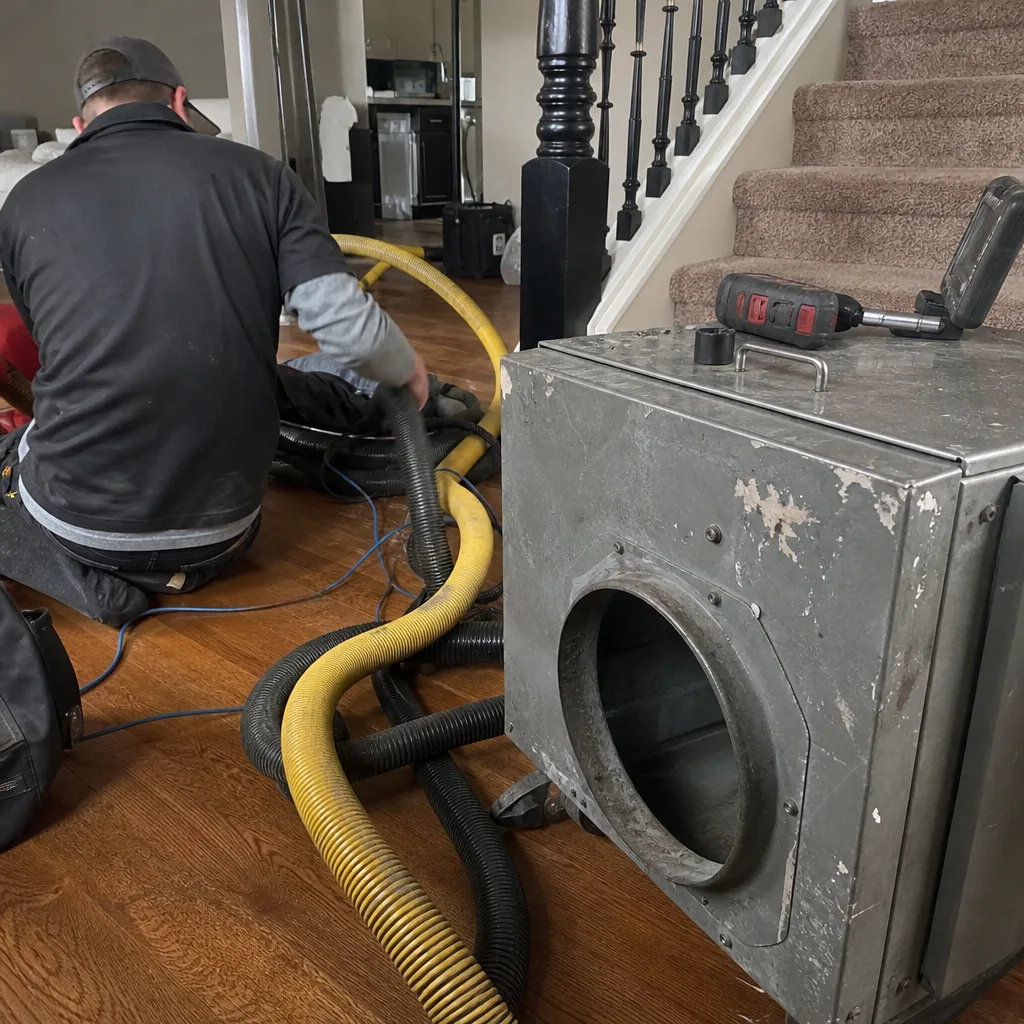 Before
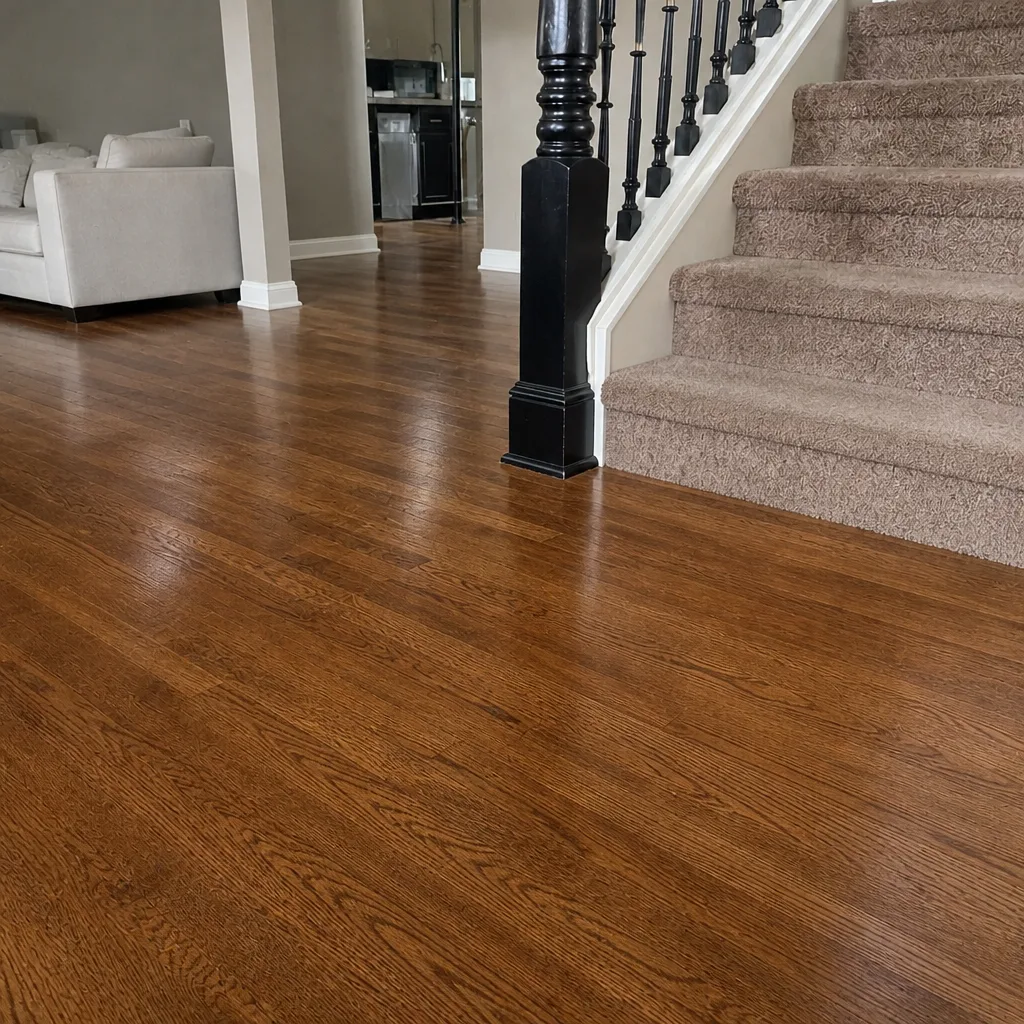 After