
Last updated November 23, 2026
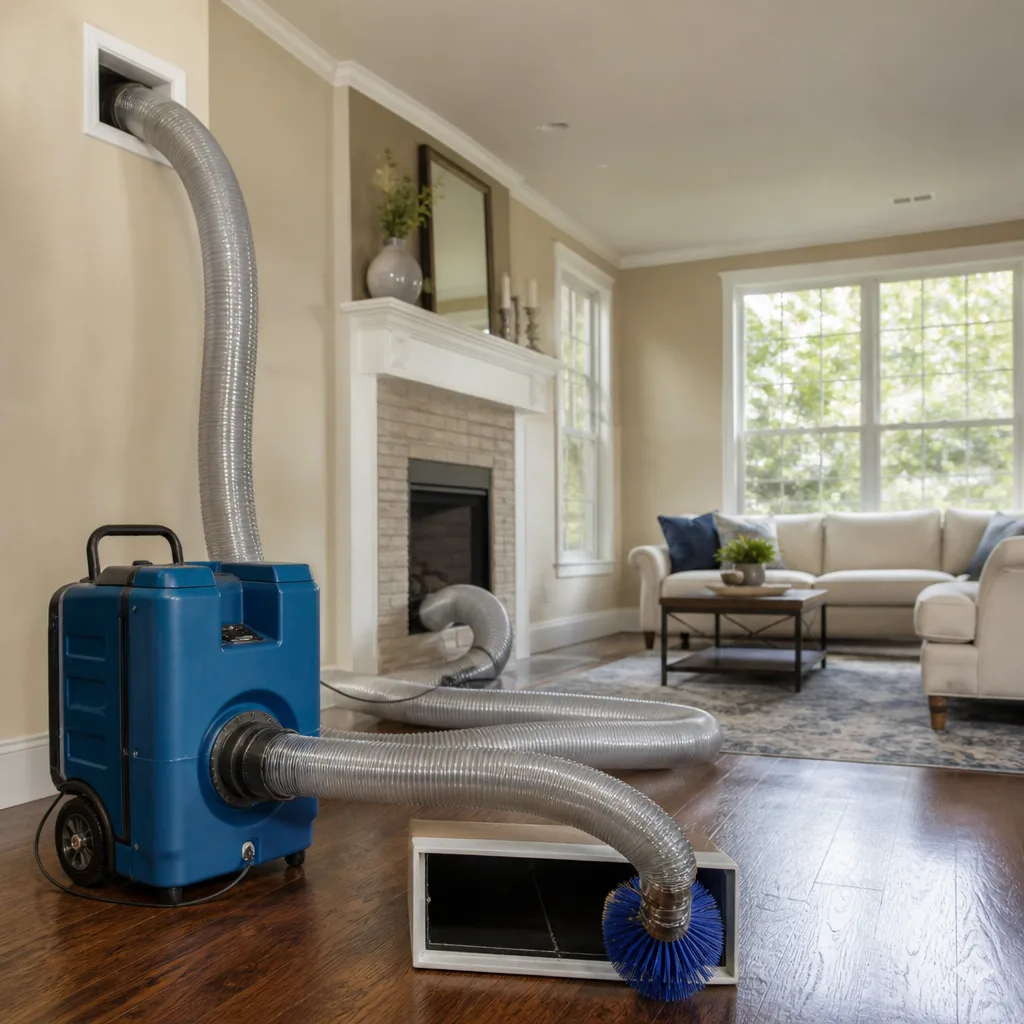 Whole-home duct cleaning
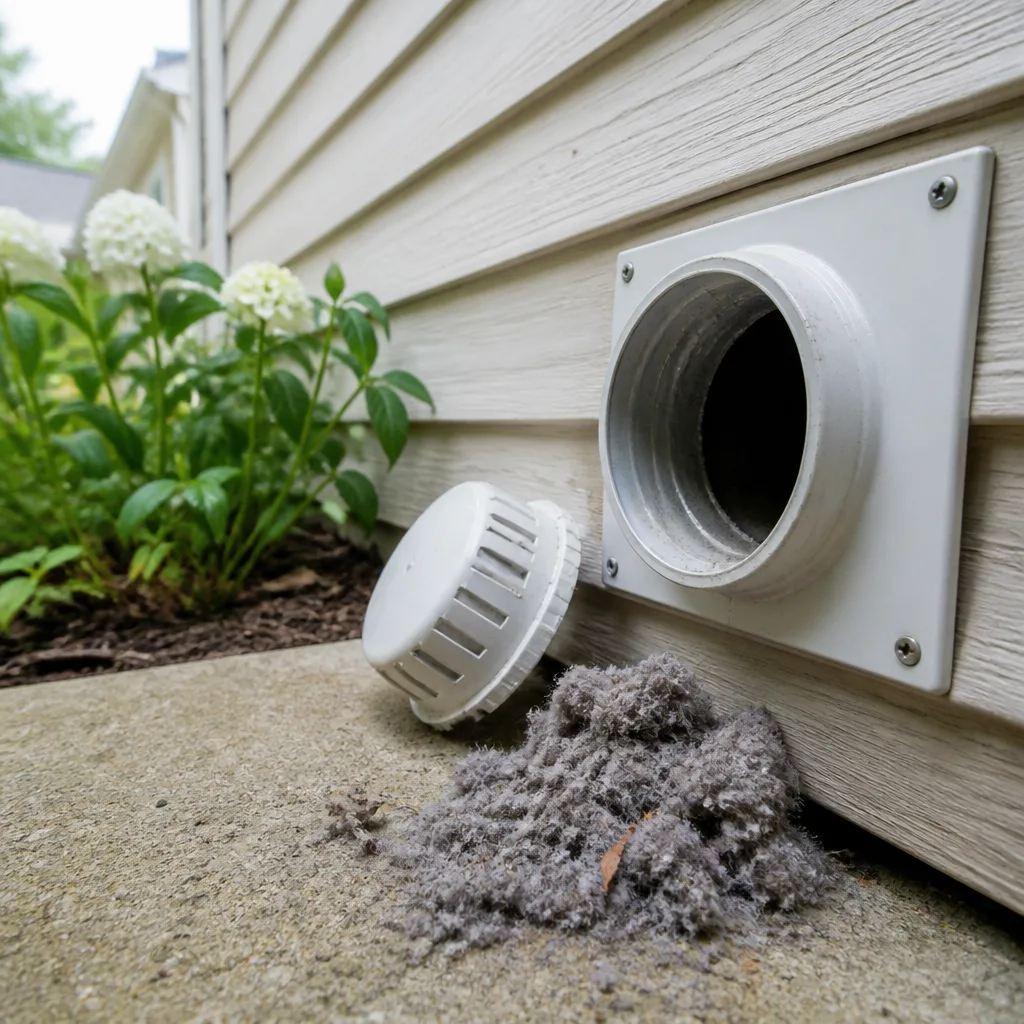 Dryer vent cleaning
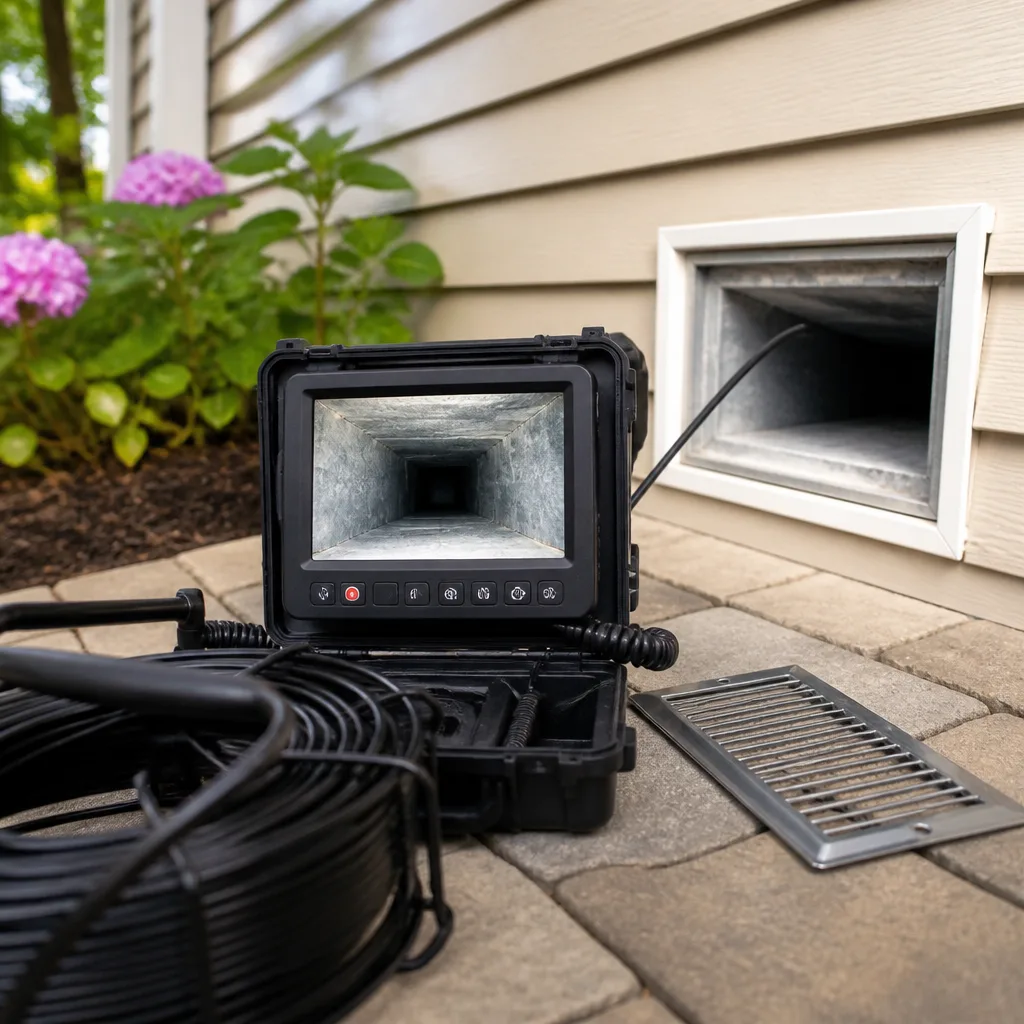 Camera inspection
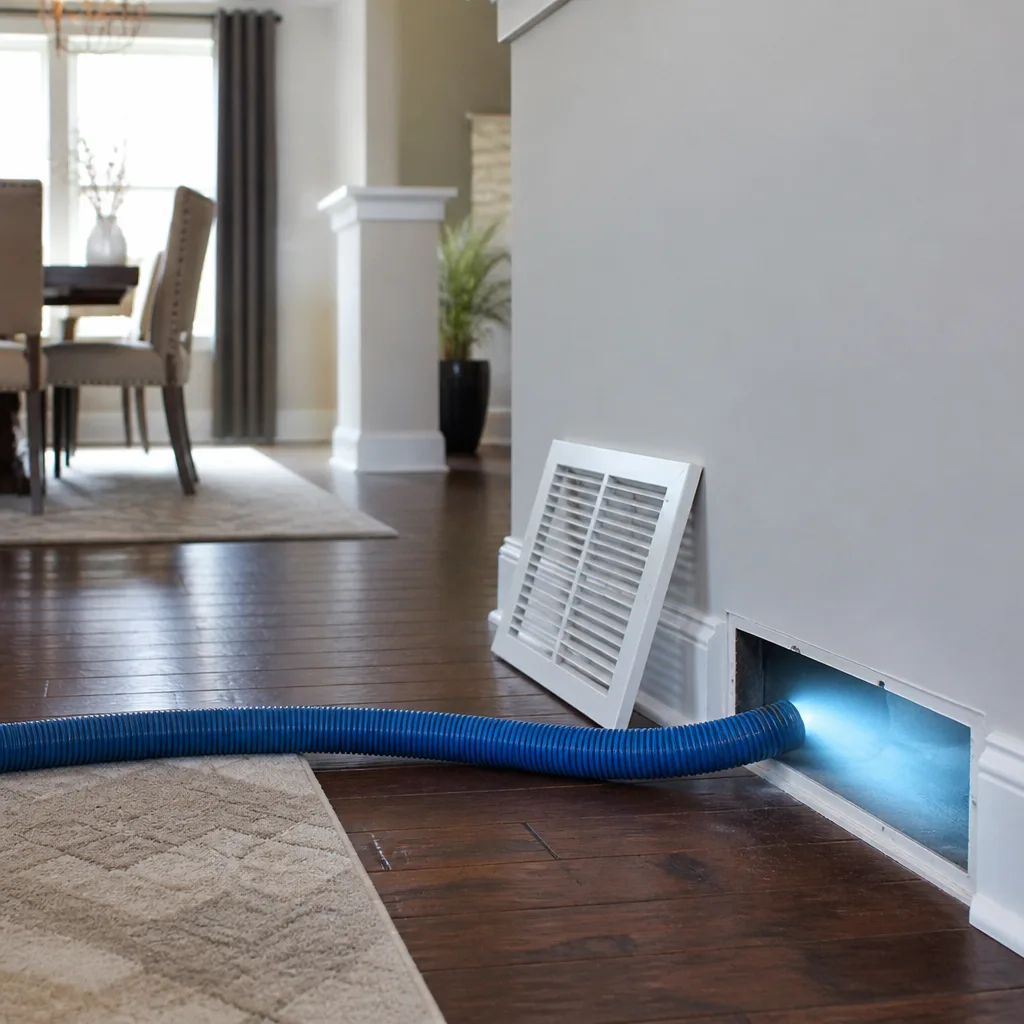 Sanitizing & deodorizing
Whole-system duct and dryer vent check with before-and-after photos - you see exactly what came out of your vents
That "$99 whole-house special" is a bait ad - the real number appears once they are in your hallway, or the "clean" is a shop-vac at the register. We photograph the inside of your ducts before and after instead.
Air Duct Cleaning Troubleshooting in Spanish Fork: Common Problems and How to Fix Them
A musty smell coming from your vents and weak airflow coming from those same vents feel like the same problem. They aren’t. One points to moisture and microbial growth inside the system, the other points to a mechanical restriction somewhere in the duct run, and the fix for each is completely different. Confuse them and you’ll pay for a cleaning that doesn’t touch the actual cause. We’ve built this guide to help Spanish Fork homeowners read their duct system the way a technician does: symptom by symptom, cause by cause, fix by fix. By the end you’ll know which problems you can handle yourself and which ones need professional negative-pressure equipment.
Quick Answer
Most air duct problems in Spanish Fork fall into a handful of categories: airflow restrictions (clogged filters, collapsed flex duct, blocked registers), contamination (dust buildup, mold, rodent debris), and leakage at joints and connections. The symptom tells you which category you’re in. Weak airflow in one room usually means a restriction or a disconnected duct. A smell that returns after cleaning usually means moisture or organic debris the cleaning didn’t reach. Uneven temperatures across rooms usually mean leakage, not an undersized HVAC system. Matching the symptom to the cause is what saves you from paying for the wrong service.
Styles & brands we work with
- Whole-home duct cleaning
- Dryer vent cleaning
- Camera inspection
- Sanitizing & deodorizing
Table of Contents
- Symptom-to-Cause Mapping: What Your Ducts Are Telling You
- Why Is Airflow Weak in Some Rooms?
- How Do You Tell What Kind of Smell You’re Dealing With?
- Why Are Room Temperatures Uneven Throughout the House?
- What Can You Fix Yourself, and What Needs a Professional?
- Post-Construction Debris in Newer Spanish Fork Developments
- Mold, Rodent Debris, and Sanitization: Three Different Problems
- How Camera Inspection and Duct Sealing Confirm the Diagnosis
Symptom-to-Cause Mapping: What Your Ducts Are Telling You
Before you call anyone, write down what your system is actually doing. The list below maps the most common symptoms to their likely causes. It’s not a diagnosis, but it narrows the field faster than anything else you can do from the couch.
- Weak airflow from one register: usually a closed or blocked damper, a crushed section of flex duct, or a disconnected run behind the drywall.
- Weak airflow from every register: usually a clogged filter, a dirty blower wheel, or a restriction at the main trunk.
- A musty, earthy smell: moisture in the system. Often condensation, sometimes microbial growth on the duct liner or evaporator coil.
- A dead-animal smell: rodent or bird debris inside a duct run. Requires removal and sanitization, not just a brush-out.
- A hot, dusty burn-off smell at the start of heating season: dust baking off the heat exchanger. Often resolves after the first cycle or after a proper cleaning.
- Uneven temperatures room to room: leakage at joints, boots, or register connections, or a duct run that was never properly balanced.
- Visible dust puffing from a register: loose joints, a damaged duct liner, or debris sitting in the boot.
We see all seven of these in Spanish Fork homes, and the reason we keep this map at the front of the guide is that the symptom almost always points to one category. A weak-airflow complaint and a smell complaint need two different visits, two different tools, and two different conversations about price. Reading the symptom correctly is the difference between fixing the problem and paying for a cleaning that doesn’t touch it.
Why Is Airflow Weak in Some Rooms?
Weak airflow in a single room usually traces back to a physical restriction in that duct run, not to a problem with the furnace or air handler. Weak airflow everywhere usually traces back to a system-wide restriction: a clogged filter, a dirty blower, or a blocked main trunk. The two scenarios point to different fixes, and starting with the cheap fix on the right scenario saves real money.
Start with the filter
The single cheapest step is checking your furnace filter. A filter loaded with dust chokes the whole system and produces weak airflow at every register. Hold it up to a light. If you can’t see light through it, replace it. A filter that looks gray and flat on the surface can be loaded through the core, so it’s worth checking both sides.
Then check registers and dampers
Walk the house and open every supply register. Homeowners sometimes close registers in unused rooms to “save energy,” which can back-pressure the system and reduce flow elsewhere. Look inside the register with a flashlight. You’re looking for a closed damper lever (common on second-floor runs), a blocked boot, or a foreign object a child or pet dropped in.
Collapsed or disconnected flex duct
If a single run has been weak for years and the register is clean, suspect the flex duct behind it. Flex duct can crush flat in a tight attic or crawl space. It can also pull off a boot or wye fitting, dumping conditioned air into the attic instead of the room. That’s a duct repair job, and it’s one we see more often than homeowners expect in Spanish Fork’s older ranch-style homes where attic runs were added or modified over time.
Blower debris
If airflow drops slowly across the whole house over months, look at the blower wheel inside the air handler. Dust accumulates on the fan blades and reduces its ability to move air. A dirty blower pulls down system-wide airflow and puts the motor under load. Professional HVAC cleaning addresses this at the unit level, using Nikro equipment built for the job rather than a shop-vac taped to a hose.
- Replace or clean the filter and recheck airflow.
- Open all supply and return registers and inspect each boot with a flashlight.
- Confirm which rooms are weak and whether the issue is one room or the whole house.
- If one room, suspect a duct restriction. If the whole house, suspect the blower or the main trunk.
- Call for a camera inspection once you’ve ruled out the cheap fixes.
How Do You Tell What Kind of Smell You’re Dealing With?
The smell is the most useful diagnostic clue in the whole system, and it’s also the most misunderstood. Homeowners usually describe three distinct smells, and each points to a different fix. Getting the diagnosis right is the difference between a $100 filter change and a full antimicrobial treatment, and between a treatment that works and one that doesn’t.
The musty, earthy, wet-basement smell
This is the smell most often described as mold. It points to moisture in the system, and the moisture source has to be found before any treatment will hold. Common sources include a clogged condensate drain on the evaporator coil, a humidifier feeding too much moisture into the duct, or a return duct pulling air from a damp crawl space. A cleaning alone won’t fix it if the moisture source is still active. What’s needed is antimicrobial treatment after the moisture is addressed.
The dead-animal smell
Sharp, acrid, and unmistakable. Rodents and birds get into duct systems through gaps at the foundation, at the roof, or at unscreened returns. This is not a cleaning problem; it’s a removal and sanitization problem. The debris has to come out, the run has to be sanitized, and the entry point has to be sealed or the animal will return. Guardsman protective products are part of how we treat and sanitize a run after removal.
The hot dusty burn-off smell at the start of heating season
This one is often normal. When the heat exchanger hasn’t run for months, dust and light debris settle on it and bake off on the first few cycles. If the smell fades within a day or two, it’s cosmetic. If it persists or smells sharp and metallic, stop running the system and have a technician inspect the heat exchanger before you do anything else. We treat a persistent metallic smell as a safety issue and don’t give advice past that point.
The chemical or perfumed smell
Usually from a plug-in, a scented candle, or an air freshener getting pulled into the return. It resolves when the source is removed, and it doesn’t need a duct cleaning. It’s worth mentioning because homeowners occasionally pay for a cleaning to solve a smell that has nothing to do with the ducts.
Why Are Room Temperatures Uneven Throughout the House?
Uneven temperatures room to room in Spanish Fork homes are usually a duct leakage issue, not an undersized furnace or a thermostat problem. That’s a useful distinction because the wrong diagnosis leads to the wrong investment. If the system is leaking conditioned air into the attic or crawl space, a bigger furnace won’t fix it; the new unit will just leak more efficiently.
Where leakage shows up
The most common leak points are the joints between flex duct sections, the boots where the duct meets the floor register, and the connection at the main trunk. In homes built on crawl spaces, we often find leaks where a previous repair spliced runs together without taping or mastic. Leaky ducts waste energy by dumping conditioned air into spaces that don’t need it and starving the rooms that do.
Why the thermostat reads fine but the back bedroom is cold
The thermostat reads the air at its own location. If the supply run to the back bedroom is leaking before it reaches the room, the thermostat never knows. This is why a room can be 6 or 8 degrees off while the thermostat reads 70. The camera inspection is what confirms it: we run a camera down the run, look for gaps, crushed sections, and disconnected joints, and show the homeowner what we see.
How sealing confirms the diagnosis
Duct repair and sealing is where a diagnosis turns into a fix. Sealing the leaks at joints, boots, and trunks stops the loss and lets the system deliver air where it was designed to go. It’s a step most duct-only cleaners skip entirely, and it’s why we include it in the same visit as a cleaning when the inspection calls for it. A cleaning that leaves the leaks in place re-contaminates the ducts over time as attic dust pulls in through the leaks.
- Uneven temps room-to-room in the same zone: suspect leakage at that run.
- Back rooms cold in heating season and warm in cooling season: suspect a leak or a disconnected run.
- Whole floor colder than the rest: suspect a trunk issue at the main plenum.
- New leak sounds or whistling at a register: suspect a partially disconnected boot.
What Can You Fix Yourself, and What Needs a Professional?
Some duct problems are genuinely homeowner fixes, and telling you that honestly serves you better than upselling a cleaning. The trick is knowing where the line is. Below is a practical split.
Fix it yourself
- Replace a clogged furnace filter. Match the size stamped on the old filter and confirm flow direction.
- Open and close register dampers to balance airflow. Read the arrow or lever orientation first.
- Reseat a loose register cover or grille that has pulled away from the wall or floor.
- Vacuum the surface dust off a register face with a brush attachment.
- Remove an object a child or pet dropped into a floor boot, if it’s reachable without tools.
Call a professional
- Anything beyond a surface filter: mold, rodent debris, or a smell that returns after cleaning.
- Any duct work behind drywall, in an attic, or in a crawl space.
- A collapsed or disconnected flex duct run.
- A dirty blower wheel or evaporator coil.
- Anything that requires negative-pressure containment to keep dust and contaminants out of the home during the job.
The reason we draw the line where we do is containment. Professional duct cleaning uses negative-air equipment to keep disturbed debris under control while it’s being removed. Rotobrush rotary-brush systems and Nikro extraction equipment are built for that environment; a shop-vac taped to a register hose is not. A homeowner who tries to clean deep ducts with a wet-dry vacuum usually stirs up more than they remove. If you’re past the filter-and-damper stage, it’s worth a professional look. Call (866) 937-8037 for a free estimate in Spanish Fork.
Post-Construction Debris in Newer Spanish Fork Developments
New construction has a duct problem that older homes don’t: construction debris that never got cleaned out. Drywall dust, sawdust, insulation fibers, drywall screws, and the occasional soda can end up in the duct system during the build, and they don’t leave on their own. This is one of the most common reasons a newer Spanish Fork home has weak airflow or a dusty smell in its first year or two.
What drywall dust does to a duct liner
Most flex duct is lined with a thin inner layer. Drywall dust is abrasive and mildly alkaline, and when it settles on that liner, it clings and builds up instead of blowing through. Over time the liner can collect enough to reduce flow and provide a surface for moisture. Insulation fibers and sawdust that land in the boot compact into a mat and choke the register. Newer homes in the Spanish Fork developments east of Main Street and around the Spanish Fork River bottoms are exactly the homes where we expect to find this in a first-year inspection.
Why a builder’s “duct cleaning” often isn’t enough
Some builders run a light vacuum through the main trunk before handoff, but that doesn’t reach the branch runs, the boots, or the register faces. Debris in the branch runs is what shows up as weak airflow or dust puffing from a register months later. A proper cleaning with rotary-brush agitation is what loosens that debris from the liner so it can be extracted.
What the fix looks like
For a newly built home, the fix is a full-system cleaning with brush agitation on every run, extraction at the boots and plenum, and a camera inspection to confirm nothing collapsed during construction. It’s also the right moment to think about filtration. If the builder installed a thin throwaway filter, an upgrade to a Honeywell or Aprilaire filter cabinet gives the system better protection going forward and costs less than it does to clean the ducts a second time.
Mold, Rodent Debris, and Sanitization: Three Different Problems
Mold, rodent debris, and general dust are three different problems that require three different treatments, and calling one by the wrong name leads to the wrong fix. The good news is that the smell usually gives it away before anyone opens a duct.
Mold
Mold in a duct system starts as a moisture problem. The growth itself may be visible as dark spotting on the liner or the coil, or it may only show up as the musty smell. The treatment is antimicrobial, and it only works after the moisture source is addressed. A cleaning alone without moisture correction will be followed by regrowth. Abatement Technologies negative-air equipment is what keeps mold spores contained during a mold-related cleaning; that’s the same standard restoration contractors use.
Rodent debris
Rodent debris is a removal and sanitization problem. The debris has to come out, the run has to be sanitized, and the entry point has to be sealed, or the animal comes back. Guardsman protective products are part of the sanitizing step. Then the entry point at the foundation, roofline, or return needs sealing.
General dust and organic buildup
This is the routine case. Dust, pet dander, and lint settle in the ducts over time and a full cleaning resolves it. There’s no sanitization needed unless the inspection shows biological growth or a lingering smell.
Why the distinction matters
Three different jobs, three different tools, and sometimes three different price points. Homeowners who ask “does my duct need sanitizing?” and get a straight answer from a technician know what they’re actually buying. If the smell returns within days of a cleaning, the treatment wasn’t matched to the cause.
How Camera Inspection and Duct Sealing Confirm the Diagnosis
Camera inspection is what turns a phone diagnosis into a confirmed one. It’s the difference between “we think it’s a collapsed run” and “here’s the collapsed run.” We use it as the check on every suspected duct issue, and we show the homeowner the footage so the recommendation makes sense.
What the camera looks for
- Crushed or collapsed flex duct at bends and turns.
- Disconnected runs at boots, wyes, and trunks.
- Tears in the duct liner.
- Standing moisture or visible mold growth.
- Construction debris that never got entirely removed.
How the inspection runs
- We confirm the symptom map in the home: which rooms are weak, which are cold, whether the smell is present.
- We run a camera down the suspect runs and look for the restriction.
- We show the homeowner the footage and explain what we’ve found.
- We quote the fix as a flat price per system, agreed before any work starts, with before-and-after photos of the ducts at the end.
- We run the system afterward to confirm the leak or restriction is resolved.
Why sealing follows the inspection
When the camera finds a leak at a joint, boot, or plenum, sealing is the fix. When it finds a crushed run, replacing that section of duct is the fix. Cleaning without sealing re-contaminates the system over time, because leaks keep pulling in attic dust and crawl-space air. We do both in the same visit when the inspection calls for it, so the repair isn’t a second project. That’s the practical reason we pair a cleaning with repair and sealing rather than treating them as separate services.
For homeowners who want the shortcut explanation of what we do, the front page is here: Spanish Fork Air Duct Cleaning. For the full-system cleaning that usually follows a confirmed diagnosis, see air duct cleaning. For the louvered-vents-in-the-utility-room problem, see dryer vent cleaning.
Common Mistakes to Avoid
- Booking a cleaning for a problem that needs a leak repair. Weak airflow from leaks doesn’t get better with a cleaning. Get the camera inspection first.
- Treating mold without finding the moisture source. The growth returns within weeks. Fix the condensate drain or the crawl-space return first.
- Using a wet-dry vacuum on deep duct runs. It stirs up more than it removes and can push debris into the evaporator coil. Surface work is fine; deep runs are not a shop-vac job.
- Skipping a new construction cleaning in the first year. Drywall dust and sawdust settle into liners and boots. A first-year cleaning prevents a bigger problem later.
- Buying the cheapest quote without asking about equipment. A coupon price that becomes a much bigger invoice once the technician is on site is a red flag. Ask what equipment is used and whether the price is per system or per vent.
- Ignoring a metallic smell from the register. This can indicate a heat exchanger problem. Stop running the system and get a technician to inspect it.
- Closing registers to “balance” the house. It back-pressures the system and makes airflow worse elsewhere. Use the dampers, not the registers.
See the difference
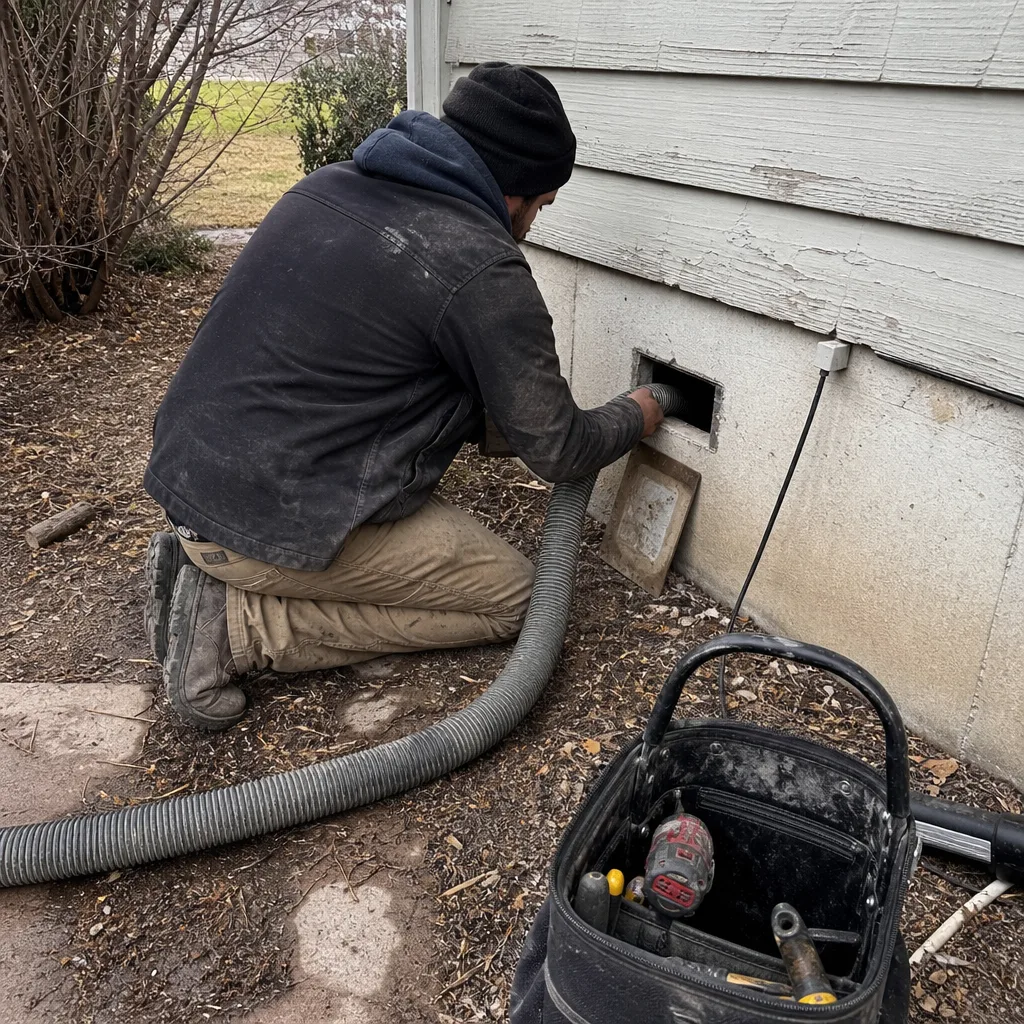 Before
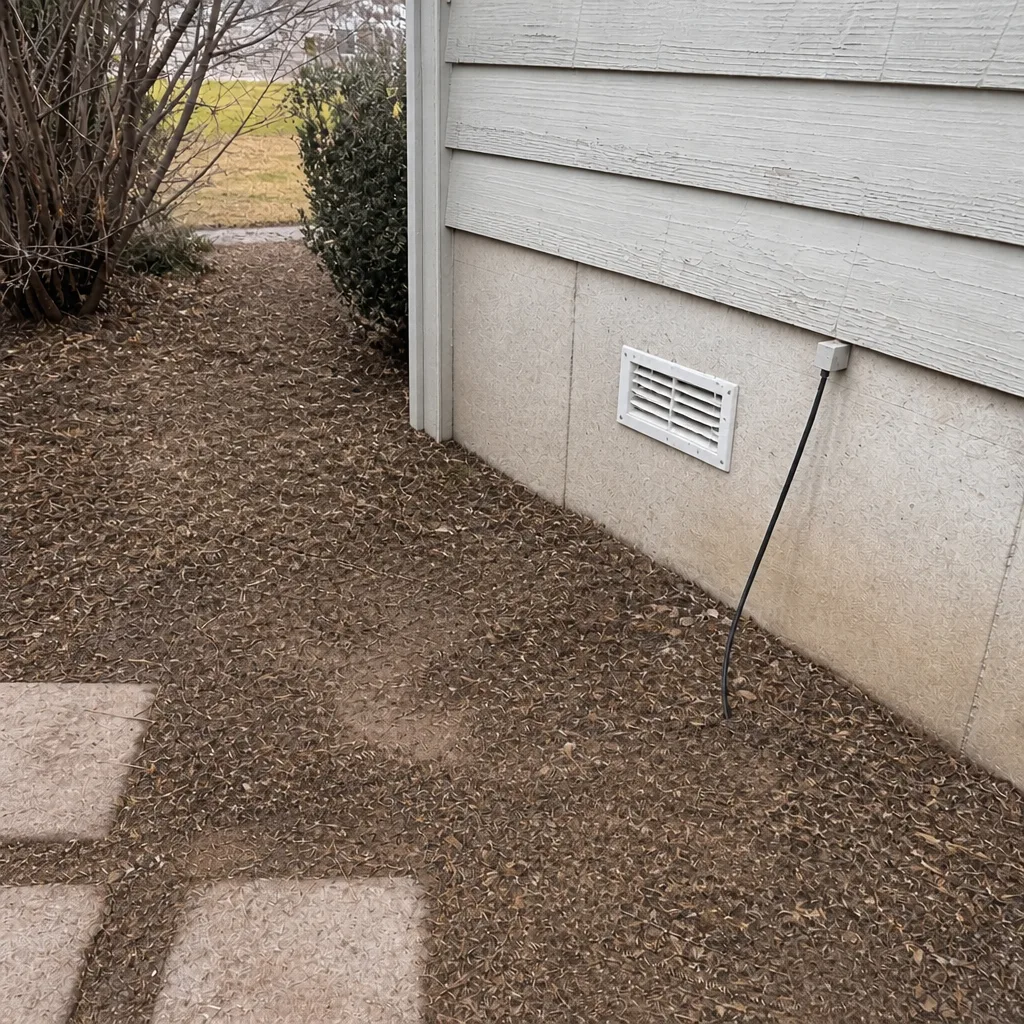 After
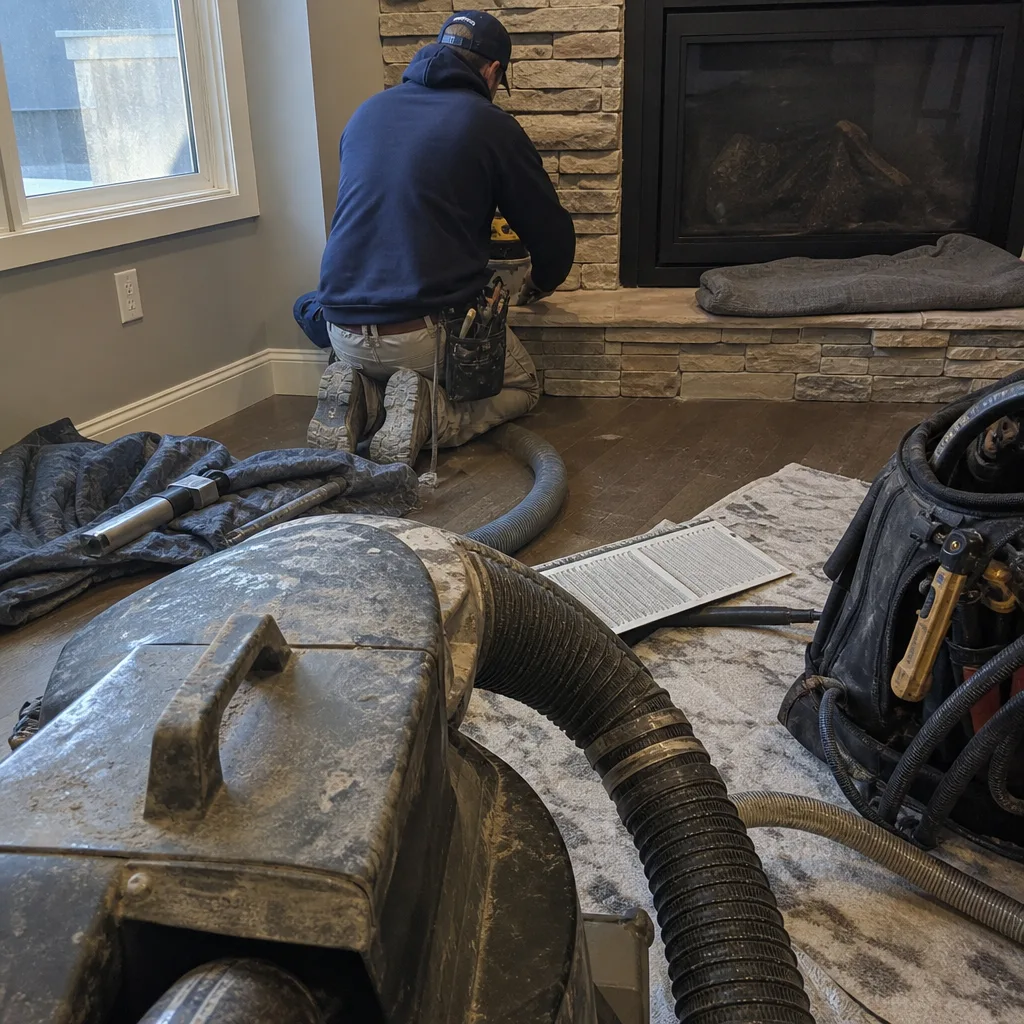 Before
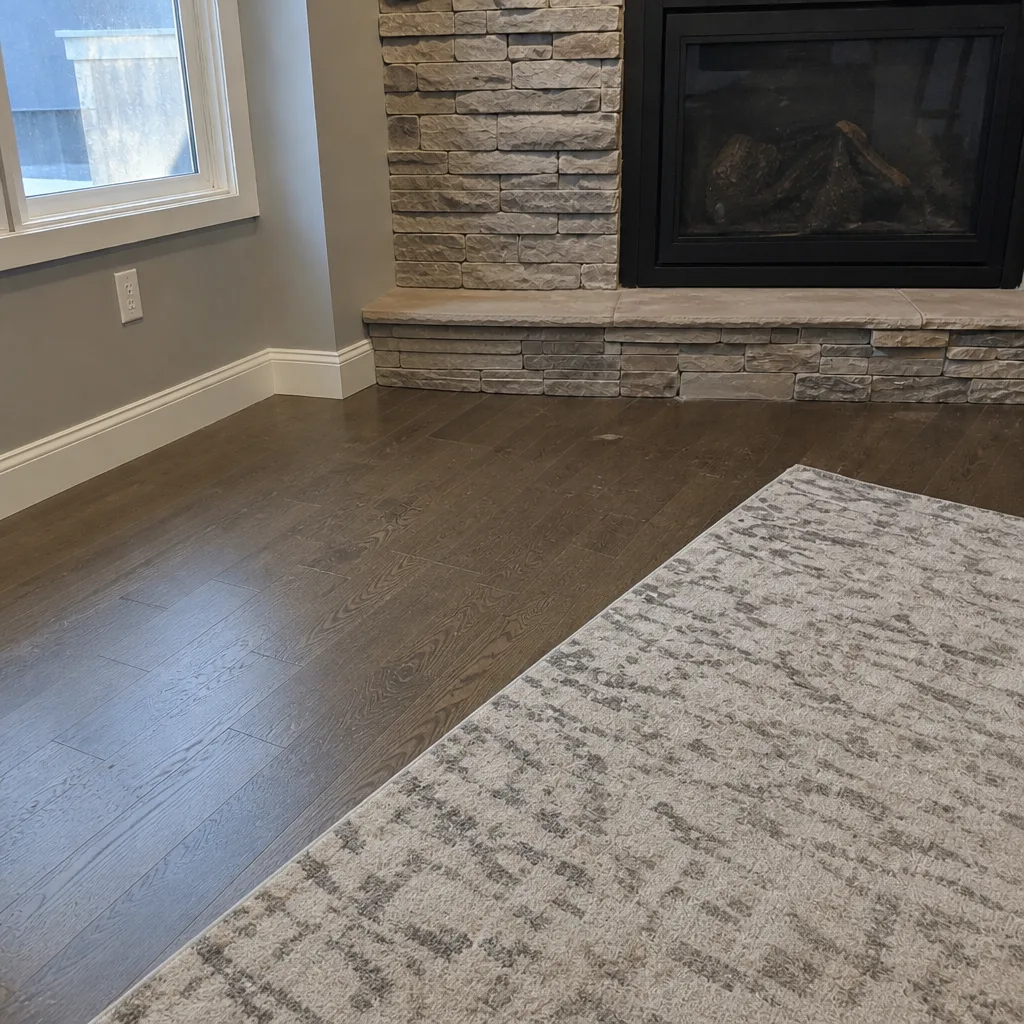 After
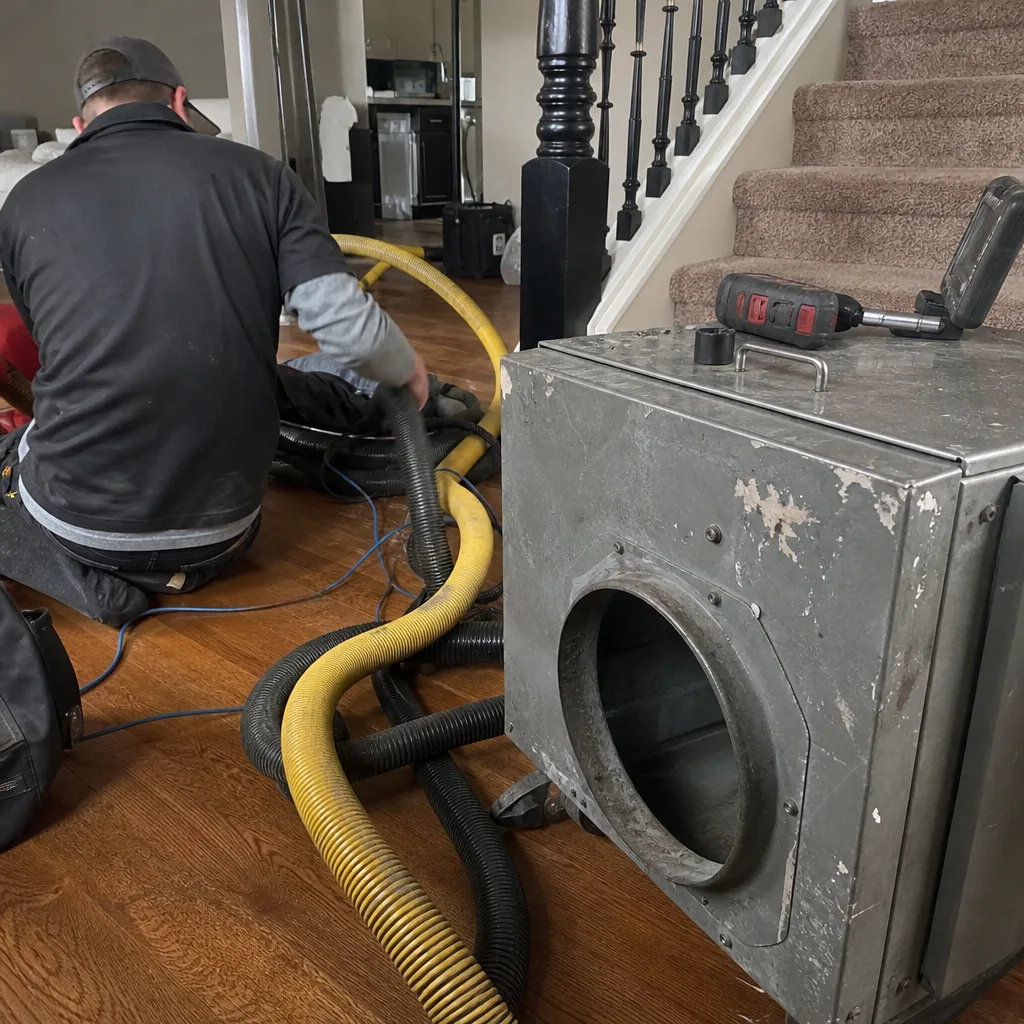 Before
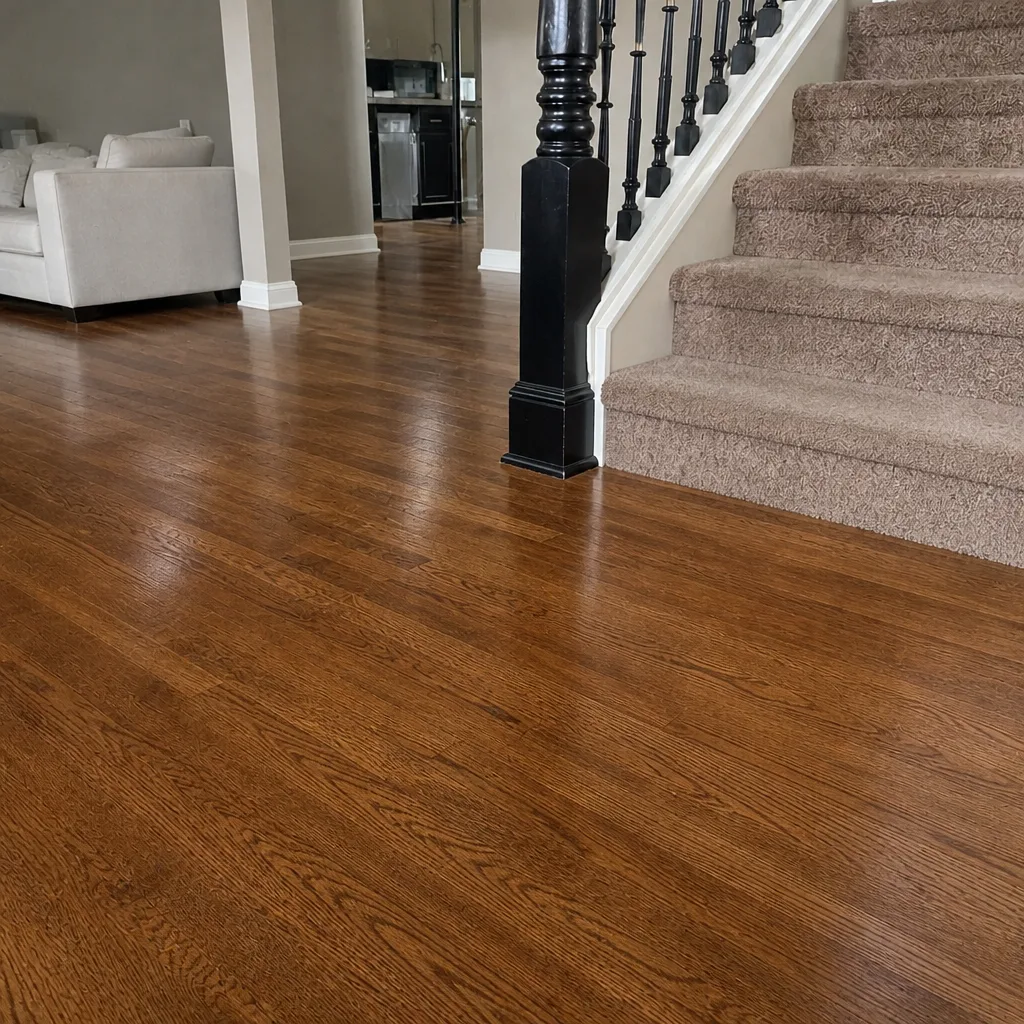 After
When to Call a Professional
Call when the symptom points past the filter-and-damper stage. Specific cases that warrant a professional look: a smell that returns within days of a cleaning, visible dust puffing from a register, weak airflow that persists after a filter change, uneven temperatures across rooms, any suspicion of rodent or bird activity in the ducts, drywall dust in a home finished within the last year, and any metallic heating smell. Those scenarios need negative-pressure equipment, camera inspection, and duct sealing rather than a homeowner-accessible fix. Our technicians have up to 8 years of experience reading these symptoms and matching the fix to the cause.
Spanish Fork Air Duct Cleaning offers free estimates in Spanish Fork – call (866) 937-8037. We answer 24/7. Fast dispatch from 7am to 7pm, Sunday through Friday.
Frequently Asked Questions
Most whole-system cleanings in the Spanish Fork area fall in a typical range of roughly $300 to $700 for a standard single-family home, with the exact price set by the written estimate after we’ve seen the system. Duct repair and sealing, if needed, is quoted separately as part of the same job. The estimate is free, and the price is per system, not per vent. Call (866) 937-8037 for an exact quote.
Cheap quotes usually price per vent or offer a teaser coupon that grows once the technician is on site. A whole-system price agreed before work starts is the honest version, and it’s what we quote. Ask any contractor whether their price is per system or per vent before you book. Call (866) 937-8037 for a flat, written quote.
Ask for before-and-after photos of your own ducts, not stock images. The technician should be able to show you the camera inspection footage and the condition of the runs before and after. Call (866) 937-8037 to book a cleaning with photo documentation.
Every few years for most Spanish Fork homes, sooner if you’ve had recent construction, a pet, a smoker in the home, or visible dust at the registers. Homes with allergies or respiratory concerns often benefit from more frequent cleanings. A camera inspection tells you whether it’s time. Call (866) 937-8037 to schedule one.
Yes, in two ways. The dry summers mean more dust and pollen in the air, which the return ducts pull in. The cold winters mean the heating system runs hard for months, and dust bakes onto the heat exchanger and the blower. Homes with evaporative coolers draw in more outdoor dust, which is worth noting for anyone considering a cleaning schedule. Call (866) 937-8037 to talk through the right schedule for your home.
Yes, in most cases. Duct repair and sealing is part of our full-system scope, and we often pair it with the cleaning so the system is sealed the same day it’s cleaned. The camera inspection confirms what’s needed before any work begins. Call (866) 937-8037 for a free estimate on the combined scope.
The Bottom Line
The path through a duct problem runs through the symptom, not the price sheet. A smell and weak airflow are different problems with different fixes. Uneven temperatures usually mean a leak, not an undersized HVAC system. Drywall dust in a newer Spanish Fork home needs a first-year cleaning before it settles into the liner. Filter changes and register clearing are homeowner fixes; mold, rodent debris, collapsed runs, and leak sealing need negative-pressure equipment and a camera inspection. Read the symptom, match it to the cause, and get the fix that actually addresses it. Our technicians have up to 8 years of experience reading these systems, and our estimates are free. Call (866) 937-8037. We answer 24/7. Fast dispatch from 7am to 7pm, Sunday through Friday.
Written by the team at Spanish Fork Air Duct Cleaning.